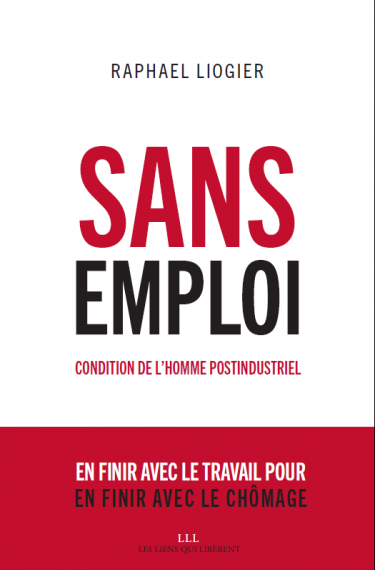
Technology and science pose a dilemma for advanced industrial societies. While wealth production has increased dramatically over the past fifty years, the amount of human labor required has simultaneously decreased. The equation seems counterintuitive, yet it is undeniable: less human effort to produce more and better results, and consequently, higher unemployment rates. Thus, this situation of objective abundance has paradoxically generated a major economic and social crisis, which quickly transformed into a moral and political one.
The core of political programs, both right and left, began to pulsate with a single, feverish pursuit: “creating jobs.” A vocabulary emerged that sanctified work, as if it were wealth in itself. The term “employment centers” suggests the existence of mines from which this precious metal can be extracted. Some are earnestly calling for “saving work” as if it were a drowning individual. Public policies today are obsessively focused on this rescue, oscillating between labor sharing (early retirement, the 35-hour workweek, etc.) and attempts to create jobs (subsidized employment programs, corporate incentives). Their repeated failures reflect a refusal to accept the inevitable reality of the gradual decline of human labor’s share in the production system.
Having diagnosed this critical situation, this article does not advocate for new measures that will miraculously lead to “full employment,” but rather for a radical change in the system. First and foremost, a change in the mindset that misleads us into thinking that full employment is a desirable, lofty goal.
| Publisher | Les Liens qui Libèrent |
| Country | France |
| Publication Date | 06/03/2020 |
| Pages | 162 |
| Edition | first |
| Size | 14.53 x 2.34 x 21.67 cm |
| About the Author | Raphaël Liogier invites us to examine our collective hypocrisy at a time when this public pretense has reached a point of exhaustion. |
| Publisher Address | info@editionslesliensquiliberent.fr |
| ISBN | ISBN : 9791020904096 |