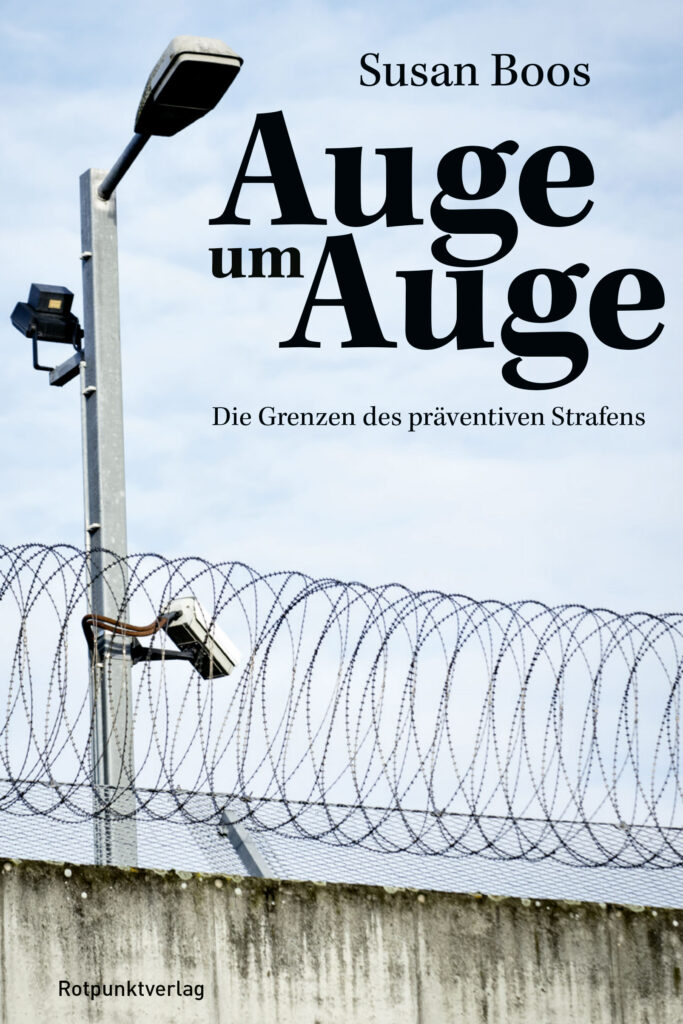
What do we do with dangerous people? With men who have killed or abused children? And those who might re-offend? Rehabilitation might be possible, but only perhaps. That’s why preventive detention—indefinite detention—was created: to protect society from those who might repeat their offenses.
Susan Buss speaks with experts, with those in preventive detention, and with their families. Renowned expert Frank Urbaniok explains how he developed the Voutris diagnostic model, which aims to identify those who are truly dangerous and should remain in detention. Mr. Vogt recounts why he couldn’t bear to remain in detention and wanted to end his life with the help of Exit, a medically assisted suicide organization. Ms. Shearer blames herself, believing she is partly responsible for her son’s detention on child molestation charges.
Susanne Bos explores various preventive detention systems, from Switzerland, where detainees are treated like ordinary prisoners, to Germany, where they are held in special prisons, and the Netherlands, where the system aims to provide them with as normal a life as possible behind bars. Upon returning to Switzerland, she learns from law professor Martino Monna why preventive detention is unacceptable in a state governed by the rule of law, and how such a state would deal with dangerous individuals.