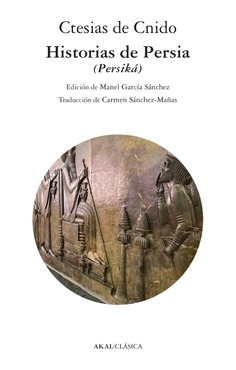
When Edward Said coined the term “Orientalism” in his bestselling 1978 book of the same name, excluding Aeschylus and Herodotus from its invention, he may have been right. But the truth is, he omitted other Greek names. Ctesias is no less significant.
Ctesias of Cnidus was born around 451–441 BCE in Cnidus, Asia Minor—then part of the Achaemenid Empire—to the prestigious Asclepiadian family of physicians. A physician himself, Ctesias cared for the great king Artaxerxes II and his family. This long service afforded him access to a wealth of information, as well as numerous rich oral traditions, about the lands encompassed by an empire that stretched from Cyprus and Lebanon to parts of Afghanistan and Turkmenistan, and—at least nominally—the Indus Valley itself. After his return to Greece, Ctesias likely completed a series of works, of which only fragments survive: most notably, the paradoxical Indica (Relations with India) and, above all, the Persica (History of Persia). Situated on the border between nascent historiography and what would later become fiction, the Persica is a key source for understanding not only the history and culture of Achaemenid Persia, but also how the Greeks perceived the Persian Other and, conversely, how they perceived themselves.
| Publisher | Ediciones Akal |
| Author | Ctesias of Cnidia |
| Country | Spain |
| Publication Date | 20/03/2025 |
| Pages | 192 |
| Edition | first |
| Size | 14.53 x 2.34 x 21.67 cm |
| About the Author | There are authors about whom we know very little, and even what we do know is not entirely certain. Ctesias of Cnidia, who lived in the second half of the 5th century BC and the first decades of the 4th century BC, is one of them. Like Herodotus, he was from Caria, in |
| Publisher Address | atencion.cliente@akal.com |
| ISBN | 978-84-460-5620-1 |