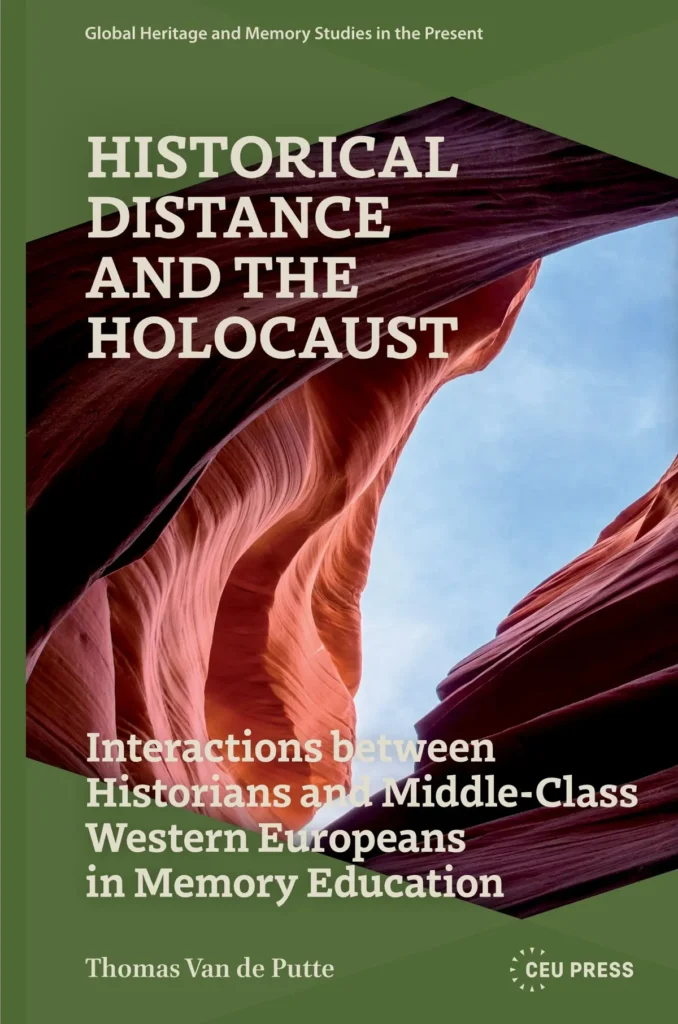
What happens when Holocaust historians leave their academic bubble and start interacting with laypeople? This book investigates practices and discourses of historical distance and their effects on vernacular understandings of the Holocaust among white, middle-class Europeans. In five chapters, Historical Distance and the Holocaust describes and explains how historians, in interactions with laypeople, strip the Holocaust of its moral meaning and emotional load, narrate it as a ‘system’, and use sick Holocaust humour as distancing strategy.
A detailed interactional analysis and thick ethnographic description demonstrate how the temporal, moral and emotional distancing practices reenforce the lay moralities and political subjectivities of the white middle-class. This comes with (mostly unintended) consequences. Distanced approaches to the Holocaust in non-academic environments reduce empathy for victims and survivors, normalize violence, disconnect the meaning of the Holocaust from contemporary conflict, and re-activate stereotypes about groups who employ more ‘close’ approaches to the Holocaust.