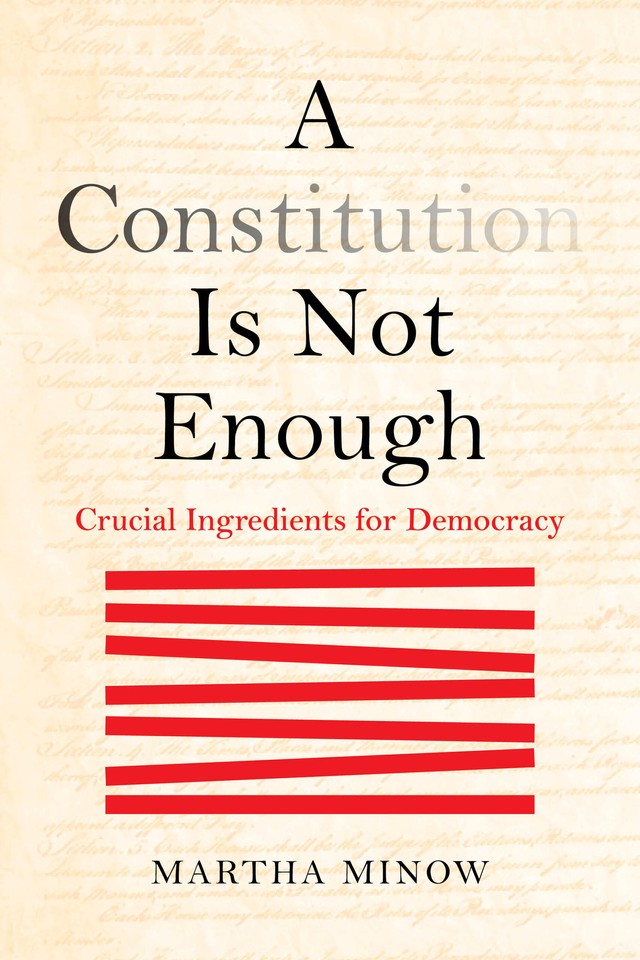
A constitution cannot establish nor sustain democracy on its own—it continually needs an educated populace, trustworthy information, public safety, practices of give-and-take, and pathways for real economic and political opportunity.
Beneath growing perceptions of constitutional crisis and democratic fragility in the United States lies a predicament: the building blocks of self-government are disintegrating, and the very institutions meant to protect democracy often stand in the way of rebuilding them.
Renowned legal scholar Martha Minow identifies these essential building blocks of self-government: effective and inclusive education, sustainable and trustworthy news sources, fair policies that protect people from firearms and other threats of violence, practice in compromise and reciprocation, and fair political and economic rules that guard against authoritarianism. Together, these ingredients equip people to engage in civic life and to animate the work of democracy—from elections and public debate to the protection of rights and the rule of law. A Constitution Is Not Enough roots these key elements in history and current threats. Pinpointing necessary steps to overcome widespread charges that the systems are “rigged,” Minow maps the roads for the ongoing renewal that is crucial to a viable constitutional democracy.