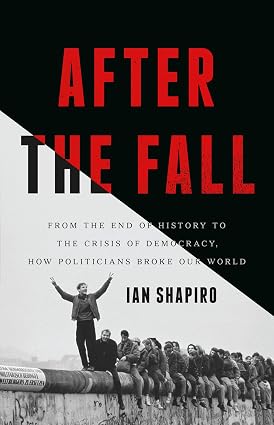
A scathing interpretation from a prestigious political scientist of the right-wing transformation of world politics since the end of the Cold War and deeply questioning many Western postulates - with a brilliant mix of realism, fiction, outspoken criticism and generosity.The fall of the Berlin Wall in 1989 ushered in an era of tremendous political optimism: Communism declined and democracy emerged in Eastern Europe, Latin America, and most of Asia. Even Communist regimes that survived bankruptcy began to embrace capitalism, and stagflation in the 1970s and industrial unrest in the 1980s became a thing of the past.Four decades later, resentment and pessimism have replaced euphoria. Britain has left the European Union, Donald Trump's populist campaign has led to the White House not once, but twice, and right-wing parties have gained influence across Europe and other parts of the world on a scale not seen since the 1930s. What happened?In his book Beyond the Fall, prominent political scientist Ian Shapiro argues that the current crisis was not inevitable at all. Politicians have consistently made wrong choices on issues ranging from the future of NATO and the war on terror to humanitarian intervention and the management of their economies. In doing so, they contributed to the creation of a crisis of confidence in political institutions, empowered parties and candidates opposed to the regime, and ignited a new cold war no less dangerous than the previous one.
After the Fall: From the End of History to the Crisis of Democracy, How Politicians Broke Our World
ما بعد السقوط: من نهاية التاريخ إلى أزمة الديمقراطية، كيف دمر السياسيون عالمنا
Not Translated
Listen to book
Bibliographic Data
| Author | |
|---|---|
| Publisher | Basic BooksWebsite |
| Primary Category | Ideas and Policies |
| Published | 2026 |
| Language | English (EN) |
| Pages | 320 pages |
| Edition | First |
| Dimensions | 6×9 |
| ISBN | 978-1541606265 |
| Translation | Not Translated |
About Ian Shapiro
Ian Shapiro is the Sterling Professor of Political Science and Global Affairs at Yale University. He is a Fellow of the American Academy of Arts and Sciences and the American Philosophical Society, and a member of the Council on Foreign Relations. He has many writings in the field of politics. He resides in New Haven, Connecticut.