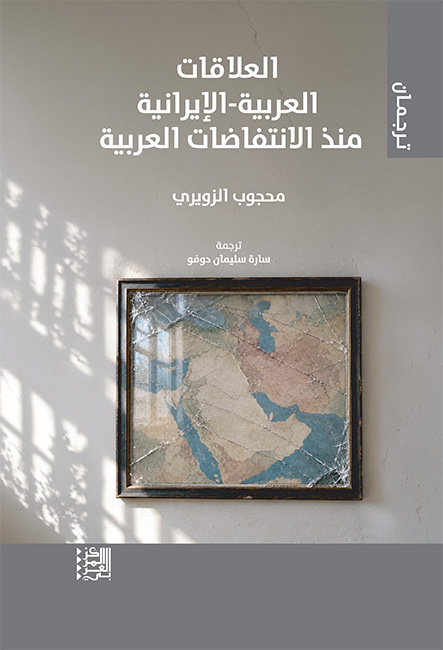
Unlike most writing on Arab-Iran relations, which looks at specific episodes and specific countries, this book, taking a long term view, assesses the overall dynamics of the relationship, discussing in particular how far religion or politics drives the relationship. It argues that although Iran asserts that religion is a key factor underpinning a coherent approach to international relations, in fact what turns out to be the key factor is the politics of particular circumstances and Iran’s specific interests. The book considers Iran’s differing reactions to the Arab uprisings of 2011 onwards, showing that while Iran supported the uprisings in some countries it sided with repressive governments in other countries. The book also examines Iran’s reaction to its own outbreak of popular discontent in 2009 which was controlled by what has been considered as severe repression and explores how Iran is viewed by ordinary people in different Arab countries.
Arab-Iranian Relations Since the Arab Uprisings
العلاقات العربية-الإيرانية منذ الانتفاضات العربية
Translated
Listen to book
Bibliographic Data
| Author | |
|---|---|
| Publisher | Arab Center for Research and Policy StudiesWebsite |
| Publisher Address | office@dohainstitute.edu.qa |
| Country | Qatar |
| Primary Category | Ideas and Policies |
| Published | 2026 |
| Language | Arabic (AR) |
| Pages | 264 pages |
| Edition | الأولى |
| ISBN | 978614445772-6 |
| Translation | Translated |
About Mahjoob Zweiri
**Mahjoob Zweiri** is a Professor in Contemporary History and Politics of the Middle East and Director of the Gulf Studies Center at Qatar University, Qatar