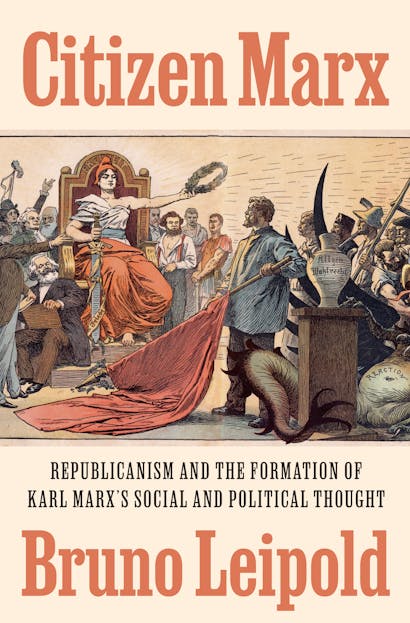
In his book Citizen Marx, Bruno Lippold argues that Karl Marx's thought, contrary to some popular interpretations, was strongly influenced by republican thought. Marx's relationship with republican thought changed over the course of his life, but its complex influence on his thought cannot be reduced to its complete adoption or rejection.Lippold challenges common perceptions of Marx that downplay or ignore his commitment to politics, democracy, and freedom, demonstrating that Marx viewed democratic political institutions as essential to overcoming social unfreedom and the domination of capitalism. Lippold asserts that one of Marx's main political values was the republican concept of freedom, according to which one is unfree when subject to arbitrary authority.Lippold places Marx's republican communism in its historical context—without limiting it to that context—and traces Marx's changing relationship to republicanism across three major periods. First, Marx began his political career as a republican committed to a democratic republic in which citizens enjoyed effective popular sovereignty.
Second, he turned to communism, criticizing republicanism but incorporating republican opposition to arbitrary power into his social criticism. He argued that a democratic republic, although not sufficient for liberation, was necessary for it.Third, prompted by the events of the Paris Commune of 1871, popular control in representation and public administration came to be seen as essential to achieving communism.
Lippold shows how Marx employed his republican communism to displace both anti-political socialism and anti-communist republicanism. Lippold points out that one of Marx's great contributions was to place politics (particularly democratic politics) at the heart of socialism.