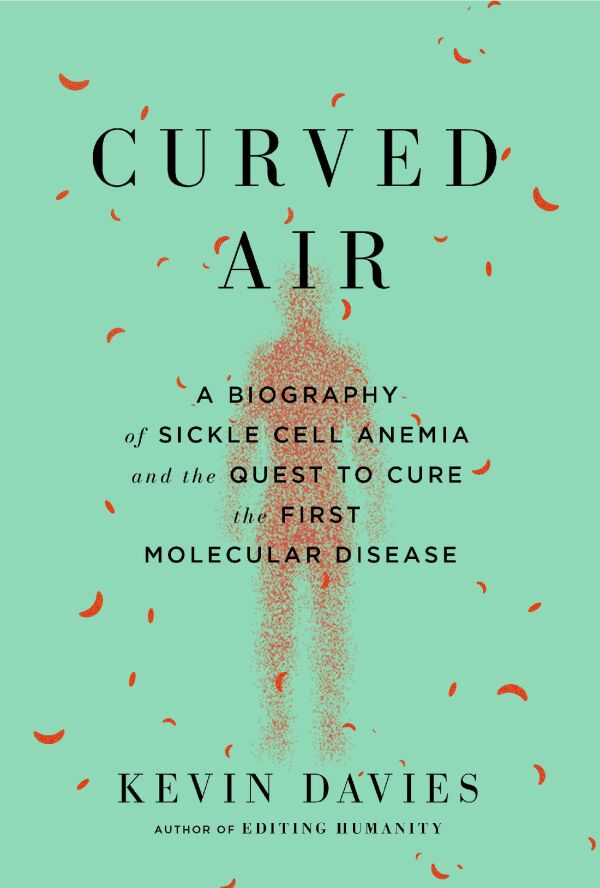
The book “ Curved Air: An Autobiography of Sickle Cell Disease and the Quest to Cure the First Molecular Disease ” by writer and science journalist Kevin Davies examines a deconstructive, historical-scientific reading that explores the complex trajectory of Mendelian anemia (sickle cell anemia), tracing its transformation from a vague medical diagnosis in the early 20th century to the focus of the latest genetic revolutions of modern times. The writer moves away from dry scientific narratives that reduce discoveries to laboratory theories, to provide an intensive narrative that linksMolecular biology, social history, racial biases, and institutional injustice have plagued groups affected by the disease for decades.
Davies highlights the painful anachronism of Mendelian anemia being the first disease diagnosed at the molecular level in the history of medicine, yet for decades it remained one of the most neglected and marginalized by health systems and research funding. The text reviews the difficult scientific record starting with the discovery of sickle cells under a microscope in 1904 and the identification ofThe microgenetic mutation responsible for it, all the way to the suffering of patients - the majority of whom are black - with battles of excruciating pain and medical neglect that often falsely classified them as seekers of painkillers. The behind-the-scenes study traces the crucial shift that has taken place in recent years with the introduction of modern gene-editing technologies (such as CRISPR), opening the door for the first time to a radical treatment that ends decades of physical and psychological attrition.The book goes beyond historical documentation to offer a serious ethical and humanistic reading of the medical future and patients' rights to equitable care. The author's thesis highlights that the story of sickle-cell anemia is not just a tale of a scientific victory over a genetic mutation, but a living testimony to the human resilience led by patients and their defenders to draw the world's attention and force scientific and political institutions to put an end to their suffering. The book ends with a coherent narrative fabric that pulsates with scientific depth and high human compassion, leavingThe reader has an accurate understanding of the vital intersection between genetic research and social justice, stressing that scientific discovery is only complete when it is used to save man and preserve his dignity.