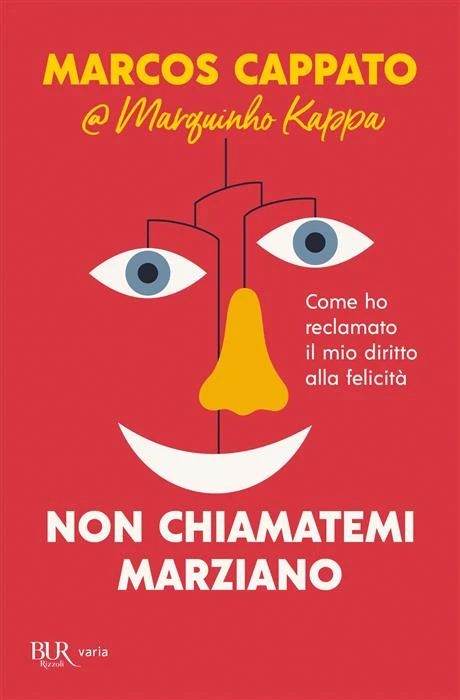
“Don’t Call Me a Martian”: A new book by Marcus Capato deconstructs the stigma of disability and offers an inspiring story of liberation and human recognition in the world of appearances
The cultural, social and legal circles witnessed the publication of a new and influential autobiography and memoir book entitled “Non chiamatemi marziano” (Don’t Call Me a Martian) by the young activist and humanitarian Marcus Capato, published in Italian by the prestigious publishing house “Rizzoli” in an inspiring edition of two hundred and four pages of medium size.This book represents an intellectual and legal event par excellence at a very important global time. It reopens the files of integrating people with disabilities and fighting prejudices in modern societies, presenting a vibrant self-recognition of honesty and courage that goes beyond the traditional narration of stories of suffering, to focus on dismantling the structure of the deficient societal outlook, declaring that the real battle does not lie in confronting the diseased body, but rather in seizing the full right to identity and independent human existence outside the categories of pity or exclusion, stressingThat no person deserves to be treated like a strange alien in their own homeland and community.
This documentary work derives its unique sobriety and human depth from the exceptional personal and struggle path of its writer. Marcos Capato is a young man who was born with spastic quadriplegic cerebral palsy (Tetraparesi spastica). He lived his early childhood in Brazil before moving when he was still a young child to Italy, where he was sponsored and adopted by an Italian family. In a new European environment, societies were found to be more focusedExcessive in appearances, a perfect body, and radiant external beauty at the expense of the human essence, Marcus learned early on a harsh and structural lesson: that physical disability in itself was never the real obstacle or the primary barrier to the individual. Rather, the biggest and fiercest obstacle is always represented by the looks of others filled with curiosity or pity, the invisible walls that society raises, and the implicit prejudices that are launched unconsciously and pre-categorize individuals based on their movement.The structure of the book stems from Marcus's absolute refusal to surrender or become self-reliant. He decided to employ contemporary technology and the weapon of alternative media to open the horizons of change, turning into a famous content creator on the YouTube platform, a civil activist, and a prominent cultural facilitator to spread awareness of the rights of people of determination and expose discrimination. Neither the stigma of disease, nor ready-made cultural biases, nor the physical and structural barriers of the cities succeeded in curbing his ambition or halting his pen. Rather, he began an awareness and humanitarian battle with a lot of persistence and determinationComprehensive and systematic to defend the rights of marginal groups, which is the great national battle that culminated in exceptional and high official recognition at the highest levels of the Italian state, where he was awarded the title “Bearer of the Banner of the Republic” (Alfiere della Repubblica) by the country’s president in recognition of his achievements and field dedication to supporting people with disabilities.Capato's style in this work is distinguished by the skillful combination of warm expressive honesty and strong hope, using his writing as a guide that guides the reader through the deep stations of his life's turning points, with all the simple human joys, bitter frustrations, fleeting regrets, and high hopes that planted his life's unique and challenging path. The book explains with much sociological analysis that the text does not merely present a courageous autobiography or a cry over physical ruins, but rather it is, in its essence, a story of true redemption and emancipation, and a brilliant and practical model.It proves how, by running after one's own dreams without throwing in the towel or giving up hope, an individual can ultimately succeed - regardless of the assessments and judgments of others - in shaping his own identity and becoming his true and complete self.The book “Don’t Call Me a Martian” received widespread and overwhelming critical praise immediately upon its release in bookstores from leading social scientists, human rights institutions, and Italian publishing platforms. Marcus's thesis was described as the most important intellectual and preventive antidote to confronting the mentality of marginalization that characterizes the modern era and the criminalization of toxic neoliberal manifestations. The young man succeeded in drafting an interesting documentary text that addresses minds and consciences, stressing that the real stake in human rights battles is not related to the biological capabilities of the body, but rather is related to the extent of courage.Communities to expand their common space and secure the dignity of the individual, which makes this work an inspiring guide and a beacon of hope for all generations seeking to break the chains of prejudice and create a more just and human solidarity tomorrow.