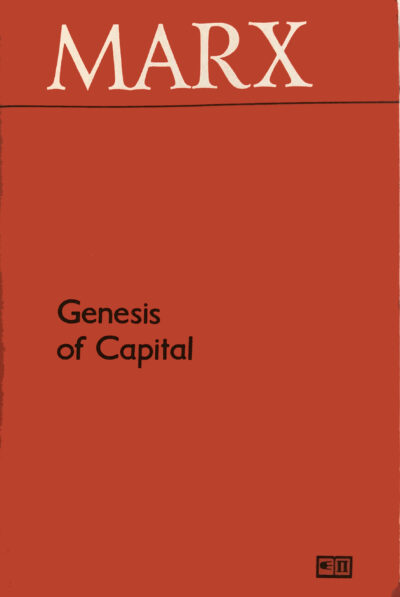
This pamphlet, extracted from the final chapters of Karl Marx’s Capital Volume 1, describes how the independent yeomen and peasantry of the late feudal period were, over a period of hundreds of years, separated from their means of subsistence and transformed into the a class with nothing to sell but their labour power, the modern working class. This was not some automatic process but was violently enforced onto people whose land was illegally stolen from them and when pauperised were forced into servitude. Punishment for resistance or flight was branding of V for vagabond, S for slavery, the slicing of an ear or for multiple offences, the gallows. Marx shows how the the creation of the working class as the source of surplus value was necessary for the expansion of capital. He also shows how the European voyages of discovery opened up an intense period of brutal exploitation and devastation of colonial peoples to amass the fortunes of the early capitalist centres where the establishment of colossal wealth coincided with impoverisation of the workers of Europe.
Genesis of Capital
نشأة رأس المال
Not Translated
Listen to book
Bibliographic Data
| Author | |
|---|---|
| Publisher | Mehring BooksWebsite |
| Publisher Address | sales@mehring.com.au |
| Country | Australia |
| Also In | |
| Published | 2026 |
| Language | English (EN) |
| Pages | 72 pages |
| Edition | first |
| Dimensions | 14.53 x 2.34 x 21.67 cm |
| ISBN | ISBN-13 |
| Translation | Not Translated |