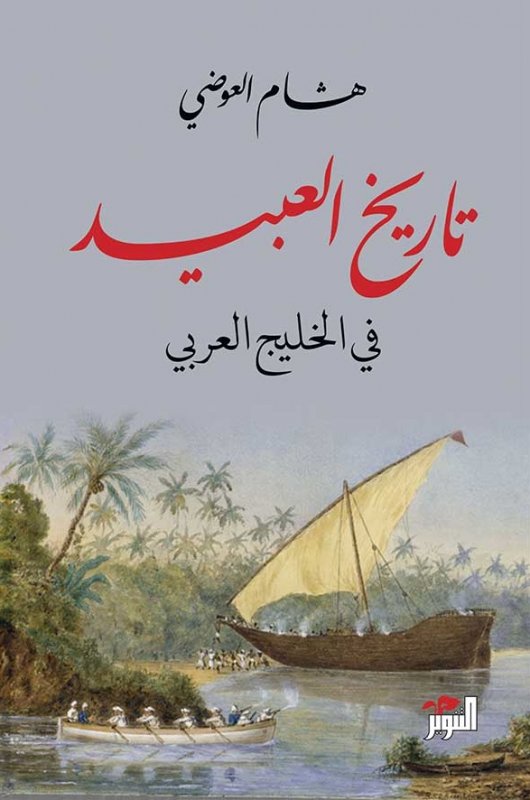
In his book The History of Slaves in the Arabian Gulf, Hisham Al-Awadhi tries to write impartially about one of the most sensitive topics in Gulf societies, which is the narrative of slaves in the Gulf. The book is considered one of the valuable studies that blended different sciences between sociology, history and geography in order to encompass the basic question in its various aspects.The history of slaves in the Arabian Gulf was issued by Dar Al-Tanweer for Printing, Publishing and Distribution within the collection of * * history and geography books * * distinctive.
The book highlights an important and controversial segment in the history of the Arabian Gulf, namely slaves. Although slaves played a large role in the culture and economy of the region, they were excluded from the official historical narrative.The author has been criticized and asked about the purpose of shedding light on that embarrassing period of history, and digging up the pain of this group, whose descendants today enjoy freedom and fusion in society. But it is time for this view to change, and for everyone to realize that the role of slaves was important and honorable in building and flourishing the societies in which they lived. This segment has had a clear impact on language, art, habits, food, and clothing, as well as its role in the economy, both before and after oil.It is therefore impossible, even immoral, to ignore them, to ignore the injustice to which they have been subjected, and to ignore their role in building our societies. The writer relied on official British documents that gave slaves the opportunity to express themselves. There is nothing in the British documents or the memories of the slaves that offends the descendants of this segment, as many of those who lived through the period of slavery condemned the injustice suffered by the slaves, and we have to realize that large numbers of them were slaves and not slaves, but free people who were kidnapped.# # # Quotes from the History of Slaves in the Arabian Gulf
But the majority of slaves in the Gulf were not from the captivity of war, or were enslaved by the parents of two slaves, but were free people who had been kidnapped from Africa and elsewhere, since they were children. The majority of slaves were born in the Gulf, especially when Britain banned the importation of slaves from Africa.\ - The slave trade flourished in the Gulf, and in the Arabian Peninsula in the nineteenth century. Slaves from Africa constituted about 11% of the population of Kuwait in 1905, 22% of the population of Qatar, 28% of the population of the UAE, and 25% of the population of Oman.Then he asked Snook: (But is the European entitled to go home carrying the impressions of "Uncle Tom's Cabin" about thinning here? Certainly not. The European will realize over time that the Arab punishes his son with the same degree of cruelty when he makes a mistake. He will realize that he did not see one of the scenes of slavery, " but rather an example of the method of Arab upbringing, whether with the slave or with the children, which, by the way, is not much different from modern ideas of upbringing."