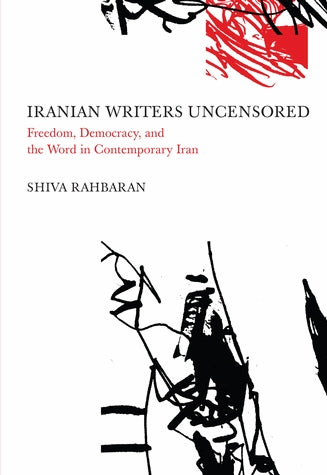
The book "Iranian Writers Without Censorship" by researcher and writer Shiva Rahbaran is one of the most prominent cultural and political references that sheds light on the intellectual scene in contemporary Iran. At its core, the book relies on the oral history approach and direct in-depth interviews.It collects live and lengthy testimonies of 11 prominent Iranian writers, poets and thinkers who lived and witnessed the major transformations that followed the 1979 revolution, and voluntarily chose to remain and produce artistically within the borders of their homeland despite all forms of repression and political censorship.
These intellectual dialogues were originally conducted in Persian in 2004, and published in English in 2012.This timing carries important significance; The meetings were carried out at the end of the rule of former Iranian President Mohammad Khatami, which is known as the “era of reforms.”
This period was characterized by a cultural breakthrough and a temporary relative margin of freedom of expression compared to the strict periods that preceded or followed it, which allowed writers to speak with greater boldness and unprecedented depth about their personal and intellectual experiences.Writers share in their dialogues the bitterness of post-revolution trauma. While intellectuals were at the forefront of calling for the overthrow of the monarchy (the Shah) in the hope of achieving freedom and democracy, the new reality quickly resulted in harsher censorship and marginalization of intellectuals, in addition to the long war with Iraq that drained the generation’s creative energies and caused stifling cultural isolation.
The book discusses the “censorship mechanisms” imposed by the Ministry of Culture and Islamic Guidance in Iran.The book shows how censorship turned into an impetus for the development of a highly intelligent symbolic and metaphorical literary language. The book believes that the true value of literature does not lie in changing political systems directly, but in its ability to create “spaces of alternative consciousness” and “pockets of freedom within the minds of readers” to resist attempts at intellectual stereotyping.