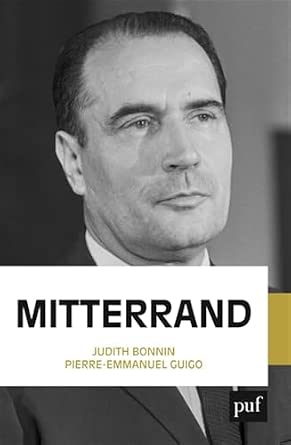
François Mitterrand is the only president to occupy the Elysee Palace for two presidential terms of seven years each after fifty years of political work, leaving a unique imprint on French political history and memory. His career, which witnessed defeats, victories, and debates, clearly embodies the idea of political complexity.
A multi-faceted and controversial figure, he is at once the “Mitrand” rejected by his critics, the “uncle” of his nostalgic voters, and the person whose public and private “affairs” continue to make headlines.This work, by Judith Bonin and Pierre-Emmanuel Guigaud, provides a factual summary and overview of contemporary and historical interpretations. Drawing on newly opened archival collections and recent research, they reveal Mitterrand's desire to control his own narrative, placing his actions and contemporary reactions in context, going beyond the official narrative and the biases of memory.
This book offers keys to understanding for both students who did not live in Mitterrand's era and those who were contemporaneous.