The astonishing and little-known story of Nobel laureate Frances Arnold's discovery of the evolution of directed enzymes—and how reading Jorge Luis Borges sparked that discovery.
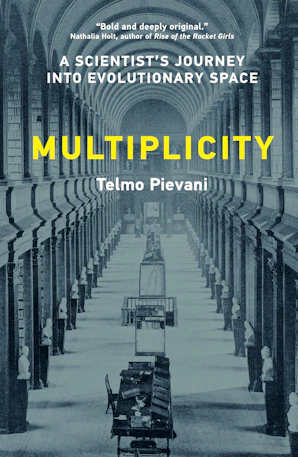
In 1976, Frances Arnold, a young engineering student at Princeton University, stumbled upon Jorge Luis Borges's short story "The Library of Babel" while in Madrid. The story tells the story of a huge library resembling a beehive, containing all the answers to humanity's mysteries. Arnold did not know at the time that this story would change the course of her lifeAnd the course of knowledge as well.
In her book Pluralism, Talmo Pievani explores her journey, the significance of Borges's legendary library and others like it, and their scholarly potential. For example, the famous evolutionary scientist John Maynard Smith imagined a similarly huge library filled with proteins instead of books.In 1995, philosopher of mind Daniel Dennett created an equally puzzling library: a library that collects all possible genomes, or all possible combinations of nucleotide bases in DNA. Why? Because by comparing all the proteins, genomes, plants and animals that exist and have existed through evolution, the possibility eventually becomes clear - what does not exist but might exist.For Arnold, the concept of this library ultimately led to the discovery of directed enzyme evolution: a method that uses nature's own method to produce new and better enzymes. This revolutionary idea created a qualitative shift in protein chemistry and biotechnology, and won the Nobel Prize in Chemistry in 2018. Drawing inspiration from works ranging from Borges to Italo Calvino, this brief book tells her remarkable story.