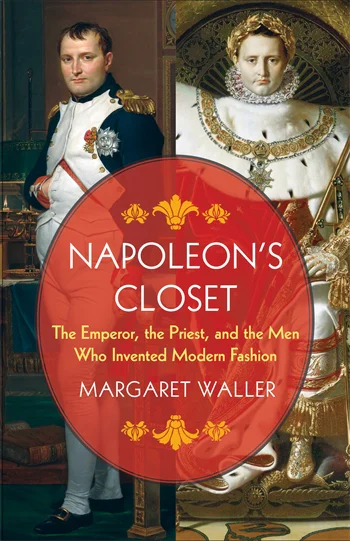
Why do the most powerful men in the West wear simple and modest clothes? Until the "Great Abandonment of Manliness" in the 18th century, luxurious and often showy clothing signaled the social superiority of men as well as women.Margaret Waller's new account of this historic change in gender and class focuses on an unlikely duo: Napoleon Bonaparte, the Corsican upstart who crowned himself Emperor of France, and Pierre Antoine Le Box la Messanger, the excommunicated priest who became Europe's premier fashion editor.Looking at breeches, the uniforms of schoolboys and officers, the robes of priests, and imperial symbols, this book shows how misogyny and homophobia contributed to masculinizing Bonaparte, La Messanger, and their peers.The 'Napoleon's Wardrobe' exhibition shows how men's fashion editors linked women and fashion, urging men to shun 'feminine' ostentatiousness in their clothing. The exhibition links the French revolutionaries' masculine concept of citizenship with the church's established requirement for its followers to wear simple and modest clothing. He shows that although Napoleon's reimposition of fine formal dress on men may seem an exception, he reserved for himself the modern man's privilege of wearing casual clothing.This book offers a lively and unconventional exploration of the contradictory history of men's clothing, revealing the origins of modern ideas about normative masculinity, homosexuality, and the "closet."
Napoleon's Closet The Emperor, the Priest, and the Men Who Invented Modern Fashion
خزانة نابليون | الإمبراطور، والكاهن، والرجال الذين اخترعوا الموضة الحديثة
Not Translated
Listen to book
Bibliographic Data
| Author | |
|---|---|
| Publisher | Columbia University PressWebsite |
| Publisher Address | Columbia University Press |
| Country | USA |
| Primary Category | Social Studies |
| Published | 2026 |
| Language | English (EN) |
| Pages | 360 pages |
| Edition | The first |
| ISBN | 9780231223331 |
| Translation | Not Translated |
About Margaret Waller
Margaret Waller is Professor Emeritus of French at Pomona College. She is the author of The Male Disease: Fantasies of Impotence in the French Romantic Novel (1992) and the translator of Julia Kristeva's A Revolution in Poetic Language (1984).