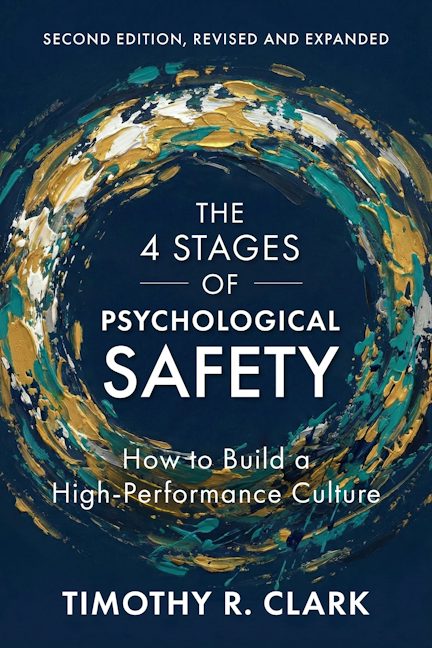
Psychological safety—the feeling of being able to express an opinion without being punished or humiliated—is crucial to high-performing teams and innovative organizations. This revised and expanded edition of Timothy Clark's groundbreaking framework for leaders provides a research-backed roadmap, through four distinct stages, that empowers individuals to feel safe, valued, and empowered.The four stages develop gradually: Inclusion Safety (feeling safe to belong and be accepted), Learner Safety (feeling safe to learn and ask questions), Contributor Safety (feeling safe to contribute and participate), and Challenger Safety (feeling safe to challenge the status quo and speak truth to power).This new edition adds robust quantitative evidence from Clark's global database of 1.2 million data points, validating the four-stage model across cultures and populations. New chapters explore what is not psychological safety, the dangers of “nice” cultures, the relationship between psychological safety and physical safety, and practical measurement strategies.
Leaders will learn how to eliminate fear, create a performance-based accountability system, and build environments where people thrive beyond expectations.