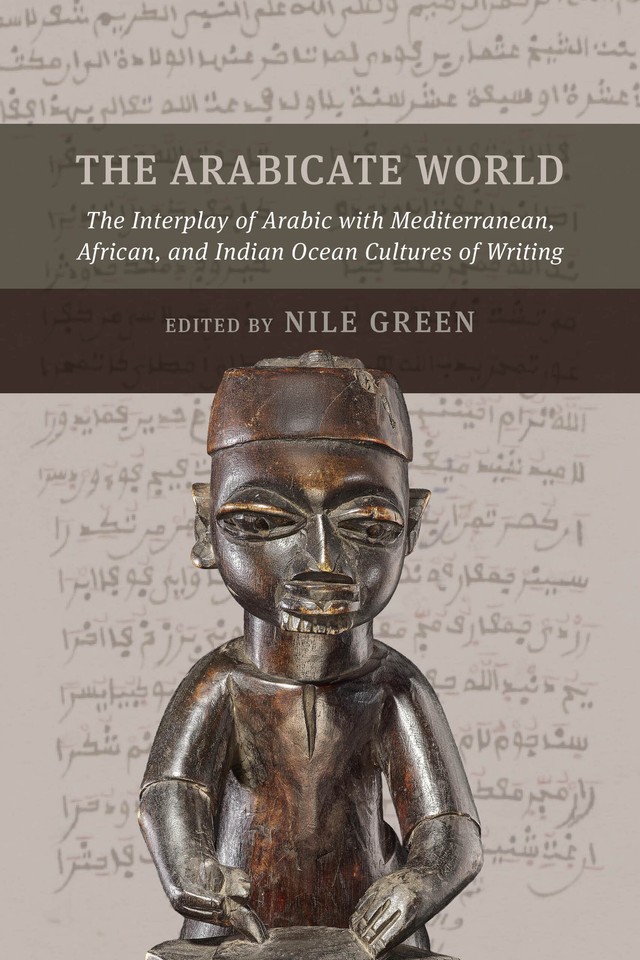
This pioneering book, which formulates the concept of “Arabic culture,” explores its contours as a global historical process that linked Africa, the Indian Ocean, and the Mediterranean through the influence of the Arabic language on new writing cultures. Through regional and linguistic case studies, twelve contributors map the spatial, social and intellectual dimensions of this Arab world.After a detailed introduction that explains the theory of the Arabic language and defines its parameters, the book traces the interaction between the Arabic language and the newly written languages on which it was based, its loanwords, its literary genres, or its legal and administrative systems.From Italy and the Iberian Peninsula through Sub-Saharan Africa to the Maldives, India and Southeast Asia, the book examines how the Arabic language shaped the development of dozens of written languages ranging from Spanish written in the Arabic alphabet, Berber, and ancient Kanembu to Swahili, Dhivehi, and Malay.
The Arabicate World The Interplay of Arabic with Mediterranean, African, and Indian Ocean Cultures of Writing
العالم العربي: التفاعل بين اللغة العربية وثقافات الكتابة في البحر الأبيض المتوسط وأفريقيا والمحيط الهندي
Not Translated
Listen to book
Bibliographic Data
| Author | |
|---|---|
| Publisher | University-of-California-PressWebsite |
| Country | أمريكا |
| Primary Category | Philosophies and Cultures |
| Published | 2027 |
| Language | English (EN) |
| Pages | 306 pages |
| Edition | First |
| Dimensions | 6×9 |
| ISBN | 9780520438927 |
| Translation | Not Translated |
About Nile Green
Niall Green holds the suspended Ibn Khaldun Chair in World History at the University of California, Los Angeles. His twelve books and ten edited books include How Asia Found Itself: A Story of Intercultural Understanding and The Persian World: The Limits of a Common Eurasian Language.