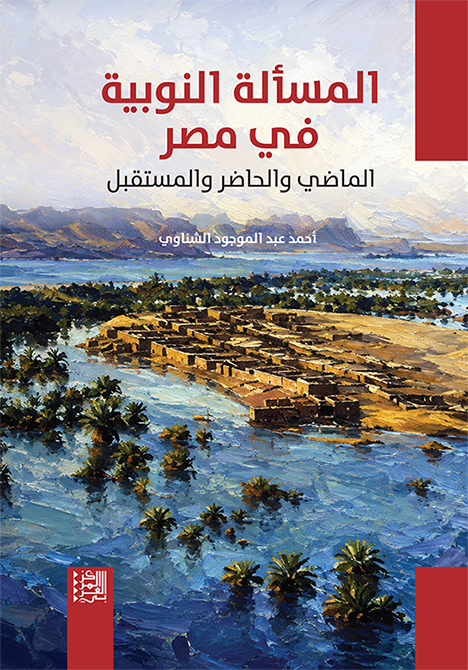
The Arab Center for Research and Policy Studies published the book The Nubian Question in Egypt: Past, Present and Future, written by Ahmed Abdel Mawjoud El-Shenawy, in 536 pages. The book deals with the Nubian issue in Egypt, which is the demand of the members of the Nubian community who wish to return to their original ancient homeland in Nubia, on the banks of Lake Nasser, to restore their right to it. It aims to provide a clear picture of the issue as it currently stands; Given its importance to the people of the community on the one hand, and to Egyptian society on the otherOther.
In order to understand the Nubian issue in a clear and deep way, the book focuses on monitoring the factors that form it and its motives, understanding its dimensions, exploring the possibility of achieving it on the ground, and identifying the difficulties it faces, based on the vision of those wishing to return. This aims to contribute to developing a vision for the desired return society, in a way that does not conflict with what the state can provide.The importance of the book is to provide a deep understanding of the issue, based on field monitoring that reflects the actual positions of Nubian youth on the issue of return, and to attempt to identify areas of difference and agreement among members of the various Nubian groups regarding it, in order to form a picture that is as close to reality as possible about the various aspects of this issue in Egyptian society. The book seeks to remove much of the ambiguity in the discourse circulating around the Nubian issue, allowing it to clarify its reality, and this requires refuting a number of “myths.”associated with it, which hinders some people’s understanding of it, and prevents reaching “compromise” solutions to the various problems related to it.
Through the anthropological field study, the researcher sought to provide a scientific addition to an issue that needs more focused studies, and to try to reach an accurate objective description of it, far from belittling, exaggeration, or exaggeration, by addressing the Nubian claims in their objective framework and realistic size, with the aim of reaching the depth of the problem and analyzing its causes, leading to ways toOvercoming it by proposing implementable solutions within the framework of the general Egyptian social reality, and in a manner commensurate with the size of the Nubian community serious about returning.