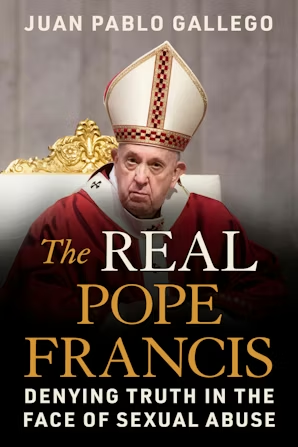
The Real Pope Francis: Denying Truth in the Face of Sexual Abuse by Juan Pablo Gallego is a comprehensive critique of Pope Francis's (Jorge Bergoglio's) handling of clerical sexual abuse scandals in Argentina, arguing that he prioritized avoiding scandals over protecting victims and pursuing justice. Drawing from historical cases like the 2002 Boston Archdiocese revelations and parallel abuses in Ireland, the book contrasts Pope Benedict XVI's "zero tolerance" policy with Francis's perceived inaction and double standards. Gallego presents evidence from Francis's tenure as Archbishop of Buenos Aires (1998–2013), where he allegedly remained silent on abuse crises, failed to support victims, and even commissioned studies defending convicted abusers. The narrative frames Francis's papacy as marred by marketing rhetoric that masks a lack of substantive reforms, such as global protocols or reparations for survivors.
Central to the critique is the case of Argentine priest Julio Grassi, a media-savvy cleric convicted in 2009 of abusing minors at his Happy Children Foundation. Gallego details how Bergoglio actively lobbied for Grassi's acquittal, including producing "Studies on the Grassi Case" in 2009–2013, which dismissed accusations as a witch hunt and challenged secular justice. This document, supervised by Bergoglio, was distributed to influence Argentine courts, even as Grassi's conviction was upheld by the Supreme Court in 2017. The book highlights Bergoglio's meetings with judges and his refusal to sanction Grassi canonically, portraying this as emblematic of his broader contempt for victims and interference in sovereign judicial processes.