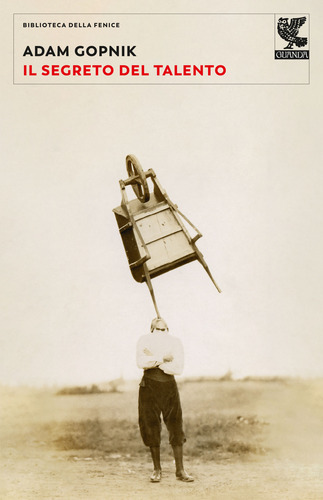
The Italian publishing house Guanda has published an interesting intellectual book by the prominent American writer and journalist Adam Gopnik, entitled “The Secret of Talent” (Il segreto del talento), which is a work that belongs to the category of general prose and is 288 pages long, in which the writer deconstructs the traditional concept of talent to make excellence and artistic mastery available to everyone through understanding the mechanisms of human development.Gopnik, who is considered one of the most famous writers for the prestigious New Yorker magazine, starts from a fundamental question about how a person transforms from just a novice amateur into a proficient expert in various fields such as drawing, dancing, cooking, or even juggling. To answer this question, the writer goes through a practical personal experience during which he meets professionals in different professions, including a boxer, a dance teacher, a painter, and a driving instructor. To prove through his autobiographical stories and interesting philosophical reflections that excellence is not born with a person as a mysterious secret, but rather it is...The result of a continuous and persistent process based on dismantling skills, then reassembling them and repeating them without giving up.
The book delivers an intelligent intellectual surprise when it argues that the most creative and influential results in the arts and human activities do not stem from strict perfection, but rather are born from “deliberate imperfections” or artistic incompleteness; Citing the trembling tones in the music, which give it the utmost levels of expressiveness, or the slanted and blurry cinematic frames that distance the viewer from the feeling of artificial falsity.The work, which received wide critical praise from international newspapers such as The Washington Post and The Guardian, ends with the formulation of a comprehensive life theory that confirms that human communication and intellectual exchange between minds achieves its peak of pleasure and satisfaction only when it remains dynamic, free, and incomplete, celebrating the simple traits and flaws that make us human.