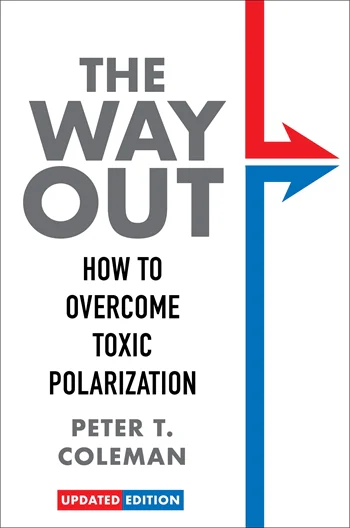
When The Way Out was first published in 2021, the partisan divide in the United States had widened to an abyss. Five years later, the crisis has worsened. Political polarization remains personal in nature, but it has also become more embedded in the social structure. Today, our political, media, and digital systems reward anger, punish moderation, and exalt those who escalate conflict.If we want less contempt politics, we must come together across our differences to redesign the incentive systems that produce contempt. How can we tone down this toxic form of polarization and start directing our energies toward our most pressing problems?The book "The Way Out" offers a way out of this dilemma. Social psychologist Peter T. Coleman shows how conflict resolution and complexity science provide guidance for dealing with seemingly intractable political disagreements, illustrating the unexpected ways in which deep-rooted oppositions can and do change.Coleman meticulously details the principles and practices of dealing with difficult divisions in our homes, workplaces, and communities, blending poignant personal experiences from his years of resolving deep-seated conflicts with lessons from the latest research. The Way Out is a timely and vital guide to breaking free from the cycle of mutual contempt, with the goal of improving our lives, our relationships, and our country.This updated edition includes practical plans and exercises for changing individual, social, and systemic practices. Coleman explores lessons learned since the first edition, examining how to transform institutions that entrench conflict and create sustainable ways of coexistence.
Drawing from physics, psychology, and neuroscience, Coleman's interdisciplinary approach offers new insights and reasons for hope. Policymakers and community activists will be keen to take this into account.The book "The Way Out" by Peter T. Coleman is a ray of hope in these difficult times. Building on decades of original research on how individuals and communities survive deep, deeply divisive conflicts, Coleman weaves insights from the empirical science of peacebuilding with anecdotes from turbulent personal experiences to offer us a guiding compass—and a set of new rules—for finding our way out of America's psychological funk.