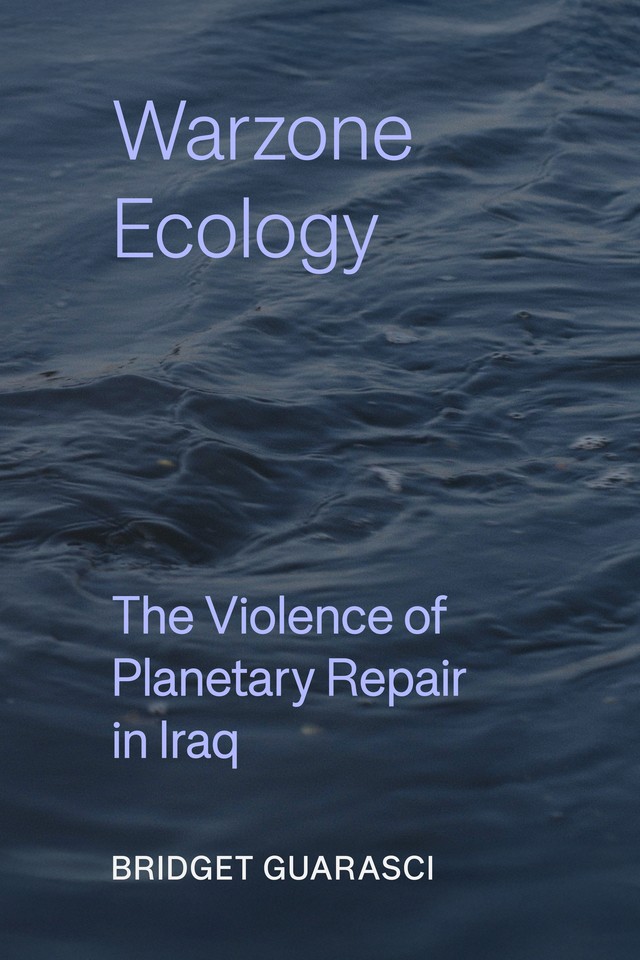
Following its invasion of Iraq in 2003, the US government cooperated with Iraqi exiles, global environmental institutions, donor countries, and corporations to protect Iraq's marshes in the Tigris and Euphrates delta, an area claimed to be the Garden of Eden. Although this environmental effort is often touted as a success story of American war and occupation, War Zone Ecology shows that it has not led to a comprehensive overhaul of the ecosystem.On the contrary, it paved the way for profiteering from war and the comprehensive destruction of the environment in southern Iraq by multinational oil companies. Drawing on more than twenty years of ethnographic and archival research across three continents, Bridget Guaraski describes a war zone environment inhabited by foreign donors, environmental experts and activists, as well as the non-human creatures they recruited for their projects.Focusing on the energy of war, its actors, and its epistemologies, War Zone Ecology points to the Iraq War as a turning point at which war became justified as environmental restoration and remediation served as a means for proponents to secure their control over another nation's natural resources.
Warzone Ecology The Violence of Planetary Repair in Iraq
بيئة مناطق الحرب: عنف إصلاح الكوكب في العراق
Not Translated
Listen to book
Bibliographic Data
| Author | |
|---|---|
| Publisher | University-of-California-PressWebsite |
| Country | أمريكا |
| Primary Category | Ideas and Policies |
| Published | 2026 |
| Language | English (EN) |
| Pages | 262 pages |
| Edition | The first |
| Dimensions | 6×9 |
| ISBN | 9780520426597 |
| Translation | Not Translated |
About Bridget Guarasci
Bridget Guaraski is associate professor of anthropology at Franklin and Marshall College.