From a Small Socialist Printing House to an Influential European Intellectual Institution
Amid the turbulent history of modern Germany, Verlag J.H.W. Dietz Nachf., widely known as “Dietz-Verlag,” emerged as one of the oldest and most influential political and intellectual publishing houses in Europe. Since its founding in 1881 by German publisher and politician Johann Heinrich Wilhelm Dietz, the company has been closely associated with major debates surrounding social democracy, labor movements, and European political thought, later evolving into a prominent platform for historical works, social studies, and contemporary political criticism.
For more than a century, the publishing house has been far more than a commercial printing business. It played a significant role in shaping political and cultural awareness in Germany and beyond, making its history deeply intertwined with the major transformations Europe has witnessed since the late nineteenth century.
Roots Connected to the Rise of the German Socialist Movement
Dietz Publishing House was founded during a period in which Germany was witnessing the rapid rise of labor and socialist movements, at a time when imperial authorities viewed opposition political literature with suspicion. Within this tense atmosphere, founder Johann Dietz succeeded in building an exceptional publishing project focused on printing political, social, and intellectual books that often struggled to reach readers through conventional channels.
The publishing house quickly became a central platform for socialist and social democratic literature, eventually turning into one of the most important intellectual voices of the German and European labor movement. It contributed to publishing works by several leading left-wing thinkers and politicians, most notably Karl Marx, alongside books addressing social justice, workers’ rights, and political reform.
The Nazi Regime Shuts Down the Publishing House
The publishing house’s trajectory suffered a severe blow following the rise of the Nazi regime in 1933. German authorities launched a sweeping campaign against institutions linked to socialism and social democracy, and Dietz became one of its major targets. Its properties were confiscated, operations were shut down, and its name was officially removed from the commercial register in 1934.
This closure marked the end of one of the most important chapters in Germany’s tradition of free political publishing, particularly because the company had represented an intellectual space opposed to fascism and authoritarianism. With the outbreak of World War II, it appeared that Johann Dietz’s publishing project had come to a definitive end.
A Divided Germany… and Two “Dietz” Publishing Houses
Following the end of World War II and Germany’s division into East and West, a unique situation emerged in which two institutions carried the “Dietz” name. In communist East Germany, “Dietz Verlag” was established under the Socialist Unity Party and became the state’s official ideological publishing arm, specializing in Marxist literature, political speeches, and official intellectual material tied to the ruling regime.
Meanwhile, the original Verlag J.H.W. Dietz Nachf. rebuilt itself in West Germany, preserving its historical legacy connected to social democracy and open intellectual debate. Over time, it became intellectually aligned with the German Social Democratic Party, especially after ownership was transferred to the Friedrich Ebert Foundation in 1973.
From Rigid Ideology to Contemporary Issues
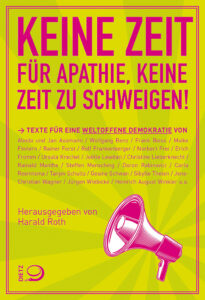
Over recent decades, Dietz Publishing House has expanded its intellectual focus beyond traditional partisan literature to include contemporary issues related to democracy, human rights, economics, and social and cultural transformation.
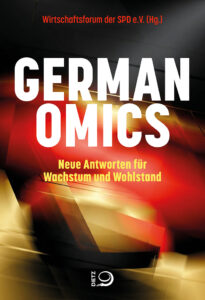
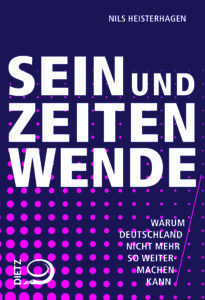
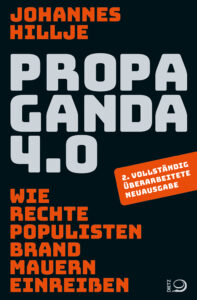
The publishing house now releases books examining the rise of right-wing populism in Europe, the impact of technology and artificial intelligence on society, crises within modern capitalism, environmental transformation, migration, economic inequality, and the future of European democracy.
Observers of the German cultural scene note that the company has sought to maintain a delicate balance between its historical left-wing legacy and a broader engagement with modern intellectual debates that transcend traditional ideological divisions.
A Strong Commitment to Historical and Political Documentation
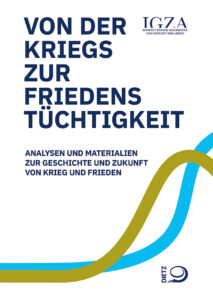
Dietz Publishing House is also distinguished by its extensive commitment to academic and documentary publishing. It produces reference series covering the history of the European labor movement, German social democracy, and modern German history, in addition to publishing speeches and documents by prominent political figures such as former German Chancellor Willy Brandt.
The publisher is also known for works dealing with Germany’s historical memory, including the legacy of Nazism, the Holocaust, and the rise of far-right movements, giving it a unique standing within German academic and research circles.
Cultural Influence Beyond Commercial Size
Although Dietz is not considered one of Germany’s largest commercial publishing houses in terms of sales or mass-market reach, its intellectual and political influence has remained remarkably significant relative to its market size. Many of its publications are used as references in universities, research centers, and political institutions, while also attracting substantial attention in European cultural circles.
This influence stems largely from its commitment to what might be described as “long-form intellectual publishing” at a time when the global publishing industry increasingly favors fast-moving and commercially driven cultural products.
A Continuing Commitment to Political Publishing
In an age dominated by social media and rapid digital content, Dietz Publishing House appears committed to preserving the political and intellectual book as a tool for understanding the world and analyzing its complex crises.
For this reason, the publisher continues to hold a distinctive place within the German cultural landscape, standing as one of the institutions that managed to survive dramatic political, economic, and cultural transformations while continuing to serve as a platform for intellectual debate and political criticism in modern Europe.