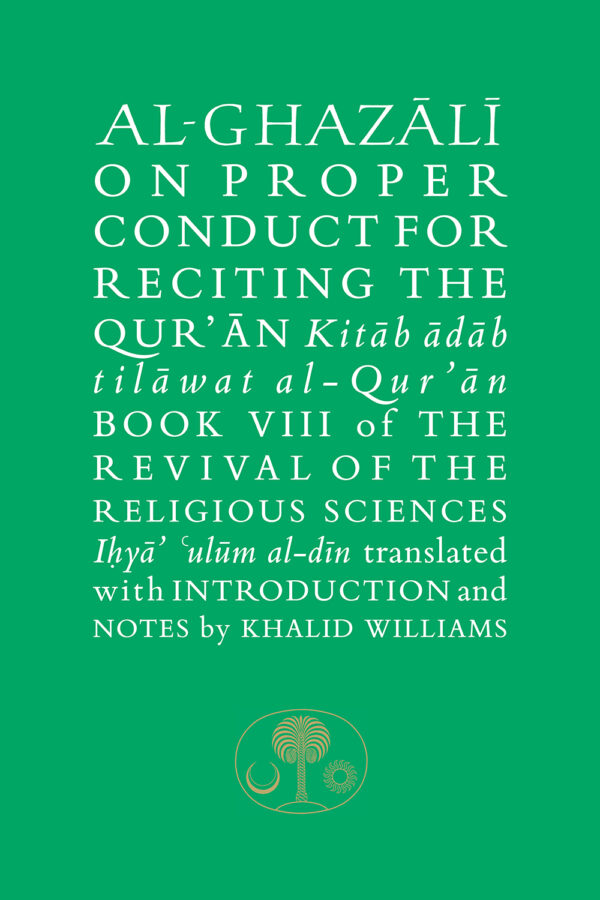
Al-Ghazali's book On the Correct Conduct of Reciting the Qur'an is the eighth chapter of Ihya' Ulum al-Din, a monumental work of classical Islam written by the famous Sufi scholar Abu Hamid al-Ghazali.
In this chapter of Al-Ihya, Al-Ghazali first establishes the status of the Holy Qur’an and those who are sincere in its recitation, then discusses the ideal outward behavior for reciting the Qur’an, and follows it with the inward actions that accompany it. Optimal virtual behavior includes:
reader status; The amount of recitation;
Divide the recitation correctly;writing method;
Weighted recitation;
Crying during recitation;
Giving the verses their due value;
What is said before, during, and at the end of the recitation;
Reciting out loud and embellishing it.
As for the internal actions, they are:
Understanding the greatness of speech;
reverence for the speaker;
Maintaining the presence of the heart;
meditation;
striving to understand;
Eliminate barriers to understanding;
self-reference;
interacting with what one reads;
Ascension and self-exile.In the final section of this work, Al-Ghazali addresses an issue that remains a source of controversy today: the problem of the permissibility of interpreting the Qur’an based on personal opinion (interpretation by opinion).