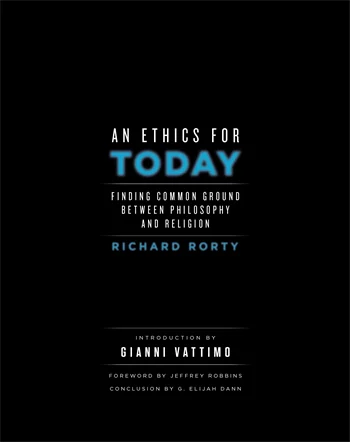
Richard Rorty is best known, perhaps most notorious, for his philosophical irreverence. His pioneering work not only rejects all theories of truth, but also rejects modern epistemology and its preoccupation with knowledge and representation.
At the same time, this famous pragmatist believed that there could be no universally correct answers to moral questions, which led him to a complex vision of religion rarely expressed in his writings.In this posthumous book, Rorty, a militant secularist, finds in the practical thought of John Dewey, John Stuart Mill, William James, George Santayana, and others a political vision shared by religious traditions. Rorty does not aim to favor faith over atheism, or to blur the boundaries between the religious and public spheres. It merely seeks to identify similarities and differences, so that an ethics of decency and a politics of solidarity can emerge.