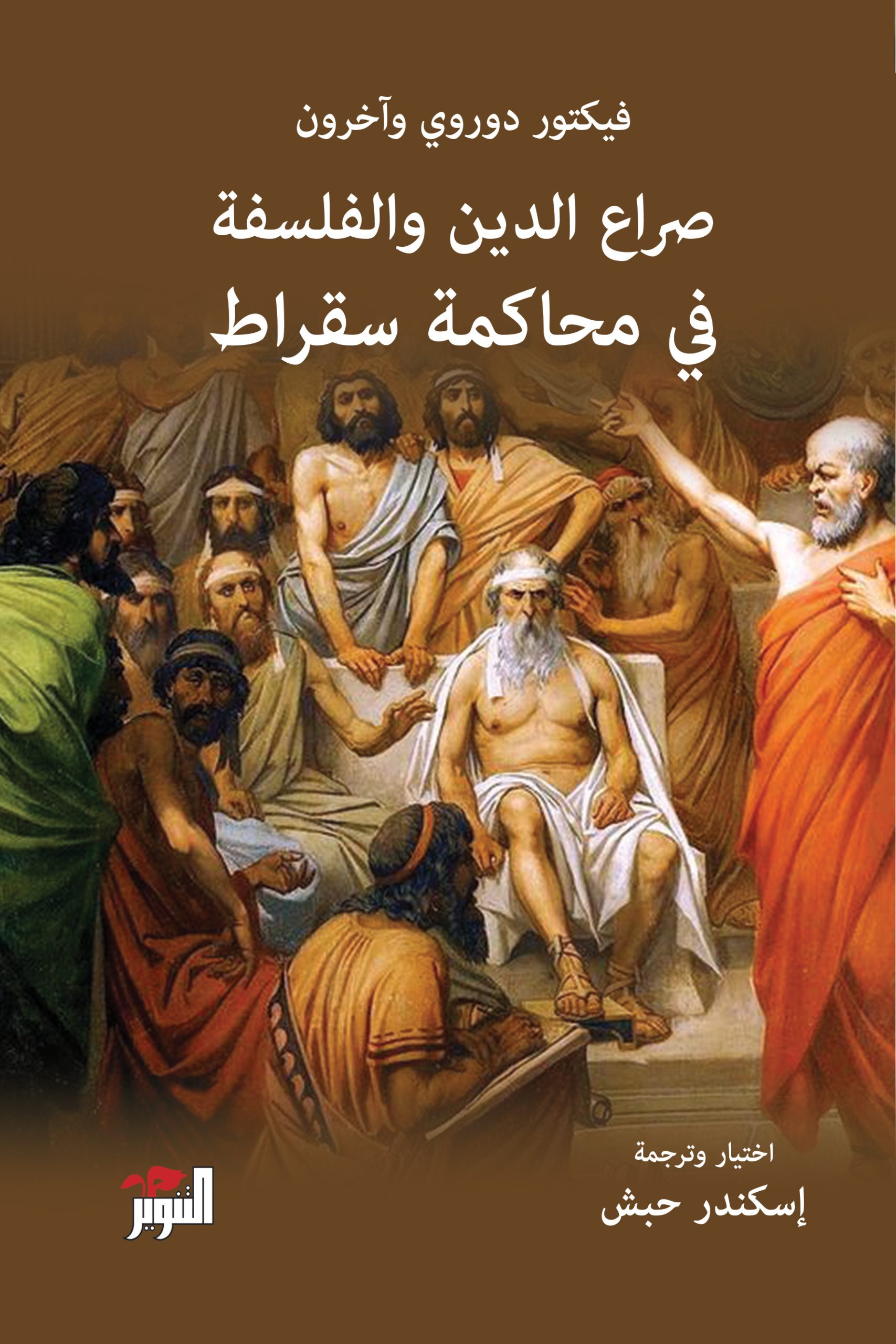
At the end of the fifth century B.C., a great and great man appeared in Athens in which he began a moral revolution that was a strong shock to the Greek spirit... to this man... to his life and ideas that we turn to in this book.
Socrates will remain a mystery, as he was in his life, as one of the philosophers who influenced a complete change in the perception of philosophy. The ink of philosophers, writers, historians, and writers on their subject types will not stop returning to the "wise Socrates", who draws from his philosophy, wisdom, and life in support of the writings ofThey all agree that he provides a model for upholding the values of knowledge, morality, courage of attitude, non-dependence, and the practice of private thinking… Whatever was said about Socrates, in all his diversity and differences, what remains puzzling in his personality is the difficulty of distinguishing the historical Socrates from Socrates in the texts of those who wrote about him, as Socrates' personalities are multiple by reading this personality. Every age, every cultural shift produces its own Socrates.Although everything we have learned about Socrates was transmitted, his trial and the manner of his death remain a foundational myth of the philosophical educational system, and the impact of that event went beyond philosophy, and extended over the ages. His life, as well as his death, were a typical example of philosophical life.
In this book, we will look through three texts at Socrates' influence on philosophy and thought, especially through his trial, which represented an ethical, philosophical, and humanistic model.