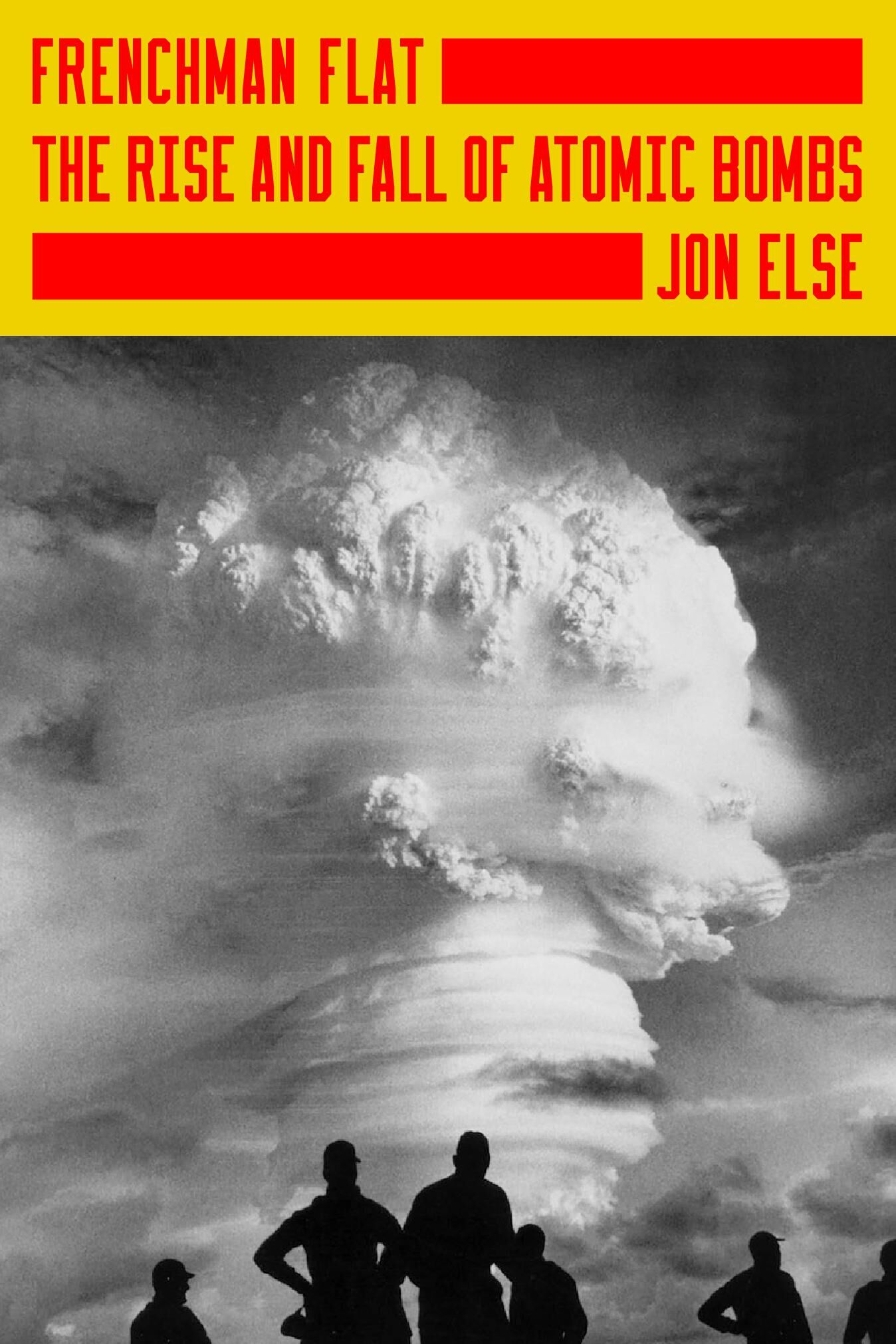
In his book Frenchman Flat: The Rise and Fall of Atomic Bombs, published by Belknap Press/Harvard University Press by documentary director and academic Jon Else, the author presents an exceptional historical and political study that adopts a “physical biography” and field viewing approach to dismantle the enormous magnitude of the American nuclear complex during the Cold War.The book starts from an innovative narrative angle. Instead of addressing nuclear history through major political decisions in Washington or abstract geostrategic analyses, Els chooses to follow the story of a single 37-kiloton tactical nuclear bomb called Priscilla, which was detonated in 1957 over an artificial urban environment designed specifically to test the destruction capabilities of the Frenchman Flat area of the Nevada test site. Through the specific story of this bomb, the work opens a broad window to understanding the structureThe enormous financial, military, and scientific that ran America's nuclear project from the 1940s to the 1990s.
The core strength of the work lies in the ingenious fusion of applied physics and human dimensions. As a writer based on decades of documentation and photography, the writer combines political history and direct testimonies of scientists, test site workers, doctors, and families residing in areas facing downwinders. The work reveals the exorbitant price of experimentationfield and how the rush to control has led to permanent pollution of the environment and surrounding communities.
The work also deals with contemporary diplomatic dimensions, highlighting how the story of Frenchman Flat is a stern warning at a time when international arms control treaties are teetering and anti-nuclear-testing norms are retreating, threatening to return to arms races and make field choices again.Frenchman Flat is not just a physical documentation of a weapon left over from the Cold War, but an extensive historical and conceptual anatomy of the gravity of the nuclear age. It is a book that reminds the reader of the terrible environmental and human price of military experiments, warning that the prevention of nuclear war so far has relied on deterrence, diplomacy, and good fortune, and that leniency with international treaties threatens to bring the world back to the brink of annihilation.