"The Final Six": a Japanese suspense novel translated into Arabic that reveals the dark side of work environments and the psychological wars of disastrous employment
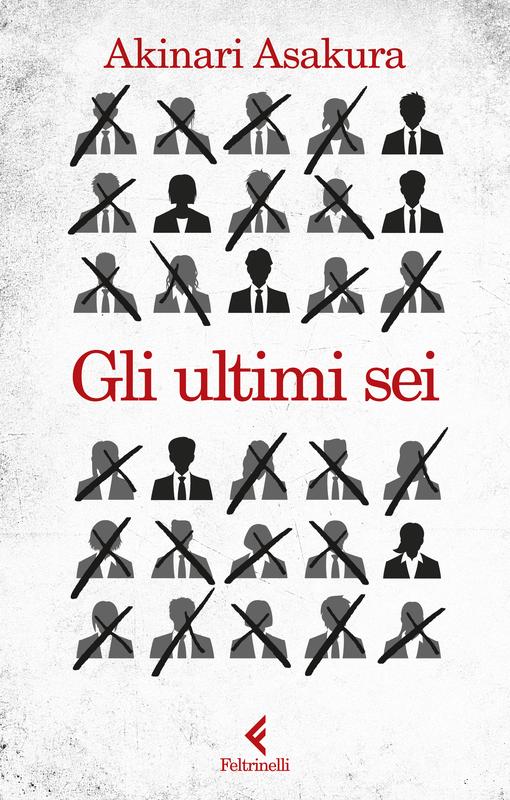
The newly translated Japanese novel "Gli ultimi sei" (The Last Six) by contemporary writer Akinari Asakura has caused a wide literary stir and extended discussion around the world. The work, published in Italian by the prestigious publishing house “Giangiacomo Feltrinelli” within the “Flo” series, in two hundred and seventy-two pages, represents a true novelistic phenomenon that has succeeded in climbing the book lists.A bestseller in Japan before moving to European and international bookstores. The novel presents a terrifying psychological and social dissection of modern work environments, exploring the dark side of fierce competition and the psychology of large corporations that sometimes push individuals to abandon their humanitarian principles for the sake of professional survival and access to a dream job.The events of the novel revolve around a twenty-one-year-old young man, Shogo Hatano, who managed to achieve an almost impossible feat by reaching the finals of a complex and extremely rigorous recruitment process. These qualifiers included the exclusion of more than five thousand candidates, leaving in the end only six competitors aspiring to win a position at Spiralinks, the most famous and attractive technology company for young people in Japan. The company initially sets a test that seems simple on the surface; Where requestedThe six candidates work as a team and prove their ability to get along and build a spirit of teamwork, with a promise to offer jobs to everyone if the collective experiment is successful.
However, the rules of the game change suddenly and shockingly a few minutes before the start of the final interview. The company announces that it will employ only one person out of the six, and what is worse is that the choice and determination of the winner will be in the hands of the competitors themselves. The administration puts them in a closed meeting room and gives them only two and a half hours to make a fateful decision. In thisThe moment, a peaceful team building exercise turns into a brutal psychological war and a real bone-breaking battle; Despite everyone's attempts to pretend to be fair play and sportsmanship at first, words soon turn into deadly weapons and blows are delivered below the belt to destroy opponents.The excitement reaches its peak as the first round of voting begins, as six mysterious scoops suddenly appear inside the room, an envelope for each candidate, each containing a terrifyingly destructive secret belonging to the other contender. These envelopes contain confidential information and personal scandals that are quite capable of destroying a reputation, ending a career, and even eliminating their owner’s entire future. As tensions escalate and alliances change with every vote thrown into the box, the hero "Shougo" finds himself forced to reveal the true identity of the scheme behind this...The vile conspiracy, and at the same time convincing his colleagues that he deserves this job before someone throws him out of the game, in light of a stifling climate from which not everyone may emerge alive.
The novel relies on a dual and exciting dramatic structure; Eight full years after that terrifying incident, a mysterious figure begins to dig up the past and investigate the details of what happened behind closed doors on that fateful day. The fundamental, troubling question arises: Who got the job in the end? What a high and humane priceWho paid to achieve this? The style of writer Akinari Asakura, who is considered one of the most original and innovative novelist voices in contemporary Japanese literature and who has won prestigious literary awards such as the Kodansha Books Prize, is distinguished by his superior ability to maintain an escalating and merciless narrative rhythm, which was confirmed by writer Lechia Troisi in her review of the novel in Republica newspaper.The novel raises, in its depth, an ethical and philosophical question addressed to the reader: What are the limits to which you can stand to get the job of your dreams? It is an enjoyable and terrifying read at the same time that exposes the falsity of modern capitalist systems in evaluating competencies, and shows how unprincipled employment environments can turn humans into ferocious monsters, which makes the novel an exceptional work of suspense that goes beyond the boundaries of traditional detective literature to delve deep into contemporary human psychology.