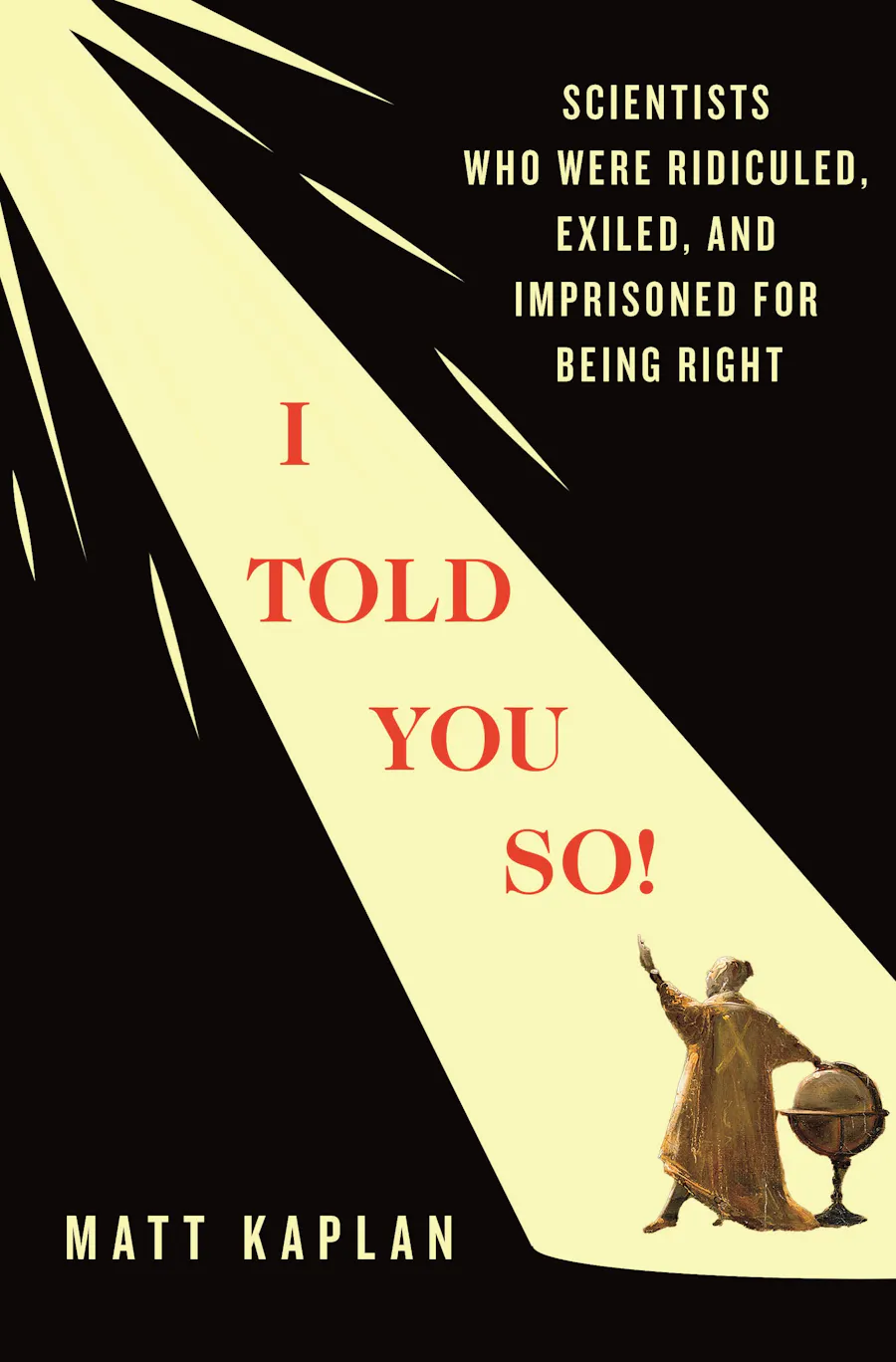
A lively and influential work of popular science about scientists who have had to struggle for acceptance of their revolutionary ideas - from Darwin to Pasteur to modern-day Nobel Prize winners.
For two decades, Matt Kaplan has covered science for The Economist, and has witnessed how scientific discoveries are often made despite, rather than thanks to, the behavior of the research community, and how support is withheld from those who do not conform to prevailing standards or do not have the right connections.In this engaging and insightful book, Kaplan tells the story of 19th-century Hungarian physician Ignaz Semmelweis, who realized that puerperal fever—a devastating infection that only affects newborn women—was spreading because doctors didn't wash their hands. Semmelweis was met with intense hostility by those who resented the idea of doctors' negligence, and is a prime example of how the scientific community can resist new ideas, even when the facts are clear.In an engaging manner, Kaplan uncovers scientific cases from the past and present to support his argument. Some are familiar, like Galileo threatening torture, and Nobel laureate Catalin Caricó being fired as she is about to discover how to use messenger RNA (mRNA), a discovery that was crucial to the development of a Covid-19 vaccine. Others are less well-known, such as the silencing of researchers over concerns about the safety of new drugs, and the ridicule of biologists for exposing fundamental flaws in the methods of conducting research onRodents.
Kaplan shows how the scientific community can work faster and better by making relatively minor changes to the factors that influence it.