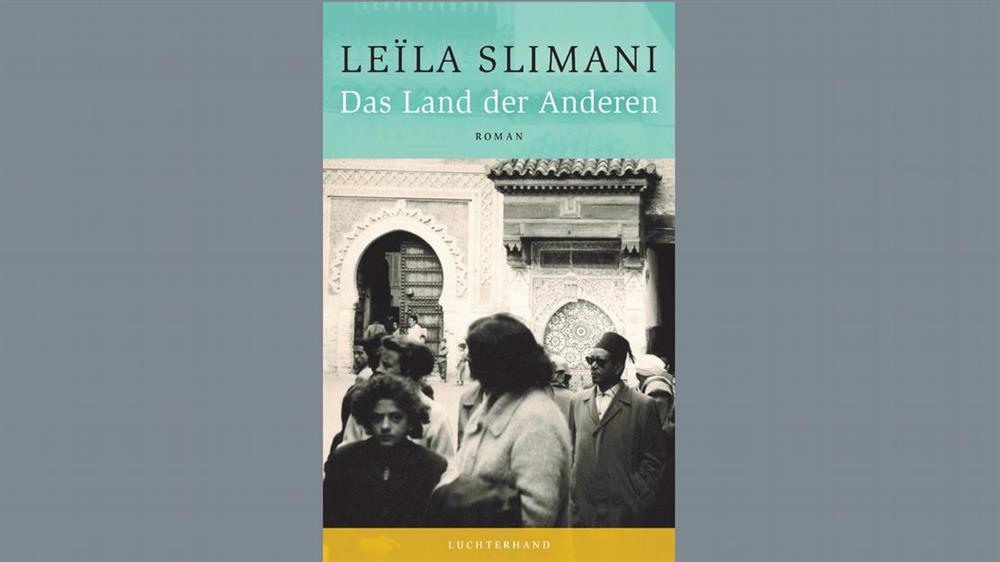
In Leila Slimani’s The Land of Others, the novel explores the question of belonging through a poignant human story. It follows the life of a family living between two cultures, within a complex historical context where identities intersect and sometimes clash.
The novel reveals that multiculturalism, despite its richness, can be a source of tension if not managed wisely. It thus reflects one of Europe’s most pressing challenges today: how to build a diverse society without allowing that diversity to devolve into division?
At the end of World War II, Mathilde, a young Alsatian woman, falls in love with Amine Belhaj, a Moroccan officer serving in the French army. They marry and settle near Meknes, at the foot of the Atlas Mountains, on a remote farm Amine inherited from his father. While Amine struggles to cultivate a meager harvest from the rocky land, Mathilde raises her two children. Mathilde yearned for freedom, so she ventured into a new and unknown life, but she soon faced harsh realities: the everyday racism of French colonial society, where marriage between an Arab woman and a French woman was unacceptable; the prevailing patriarchal traditions among the local population; and her husband's lack of understanding. But Mathilde did not give up; instead, she fought for recognition and for her life in a foreign land.