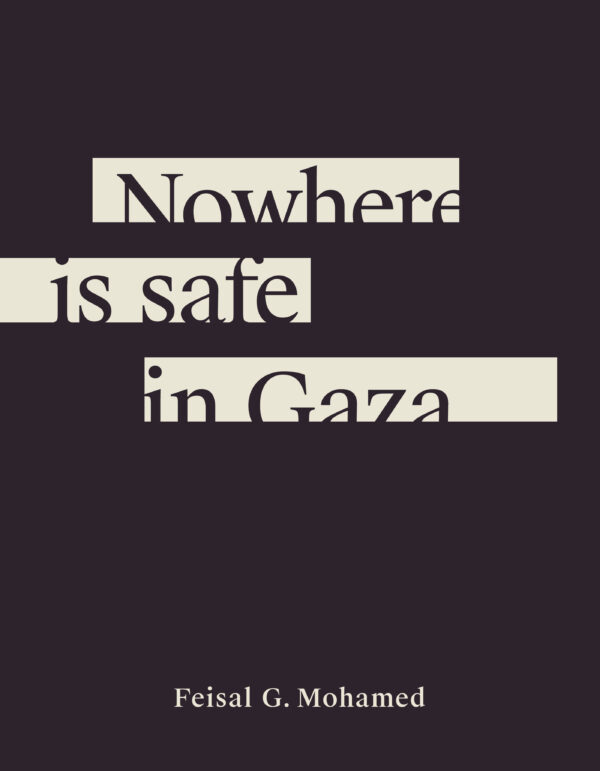
A book-length poem of erasure, it takes South Africa's application to the International Court of Justice as its body for violating the Convention on the Prevention and Punishment of the Crime of Genocide.
In his book “No Safe Place in Gaza,” Faisal J. The human experience lies at the heart of this legal text, highlighting the suffering of Palestinians on the ground and the stated intentions of Israeli officials. Through the use of concealment techniques, the language of bureaucracy fades into the background, making way for...Palestinian voices to express themselves with full force.
While reading Faisal Muhammad’s poem “No Safe Place in Gaza,” I felt as if I were falling among the scattered islands of poetry and into the space of silent deletion, where the catastrophe of genocide leaves a gap of loss. Erased sentences indicate solidarity with those who reject erasure, with those who resist statelessness.These pages draw a map of a region stripped of everything, until it became a hospital, blood and bombs, but still vibrant with humanity. From that place, between the destroyed cemetery and the looted church, Muhammad reveals to us a meager and painful testimony. Here is a frail witness who speaks beyond the specter of twenty-first-century censorship and into the power of poetry.Faisal J. recalls: Muhammad, in his book No Safe Place in Gaza, explores Milton's idea of blindness and insight, and implores us to look beyond what he has deliberately erased from our eyes. The book brings to light legal structures that have failed in their duty of moral accountability, and through this darkness, it shows - painfully and horrifyingly - the physical devastation of Gaza, and the needs of every human being on earth, especially Palestinians: to be seen and treated as human beings.