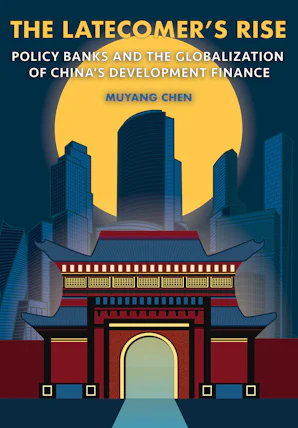
- In The Rise of the Late , Muyang Qin reveals the nature and impact of a form of fast-growing international lending: Chinese development finance.
Over the past few decades, China has become the world's largest provider of bilateral development finance. Through its two national banks, the China Development Bank and the Export-Import Bank of China, it has financed infrastructure and industrial projects in many emerging markets and developing countries. However, this massive capital boom has raised questions about the characteristics ofChinese bilateral lending and its repercussions on the international system.
Drawing on a variety of new primary Chinese sources, including interviews and official banking documents, Chen identifies the defining characteristics of China's bilateral development finance, explains its origins, and analyzes its implications. It compares China's policy banks with their foreign counterparts to show that the China Development Bank and the Export-Import Bank of China, despite their state support, are in fact market-oriented as well; they serve asgovernment bodies insofar as they are for-profit financial agencies that serve both state and corporate interests. This approach, which emerged from China's own economic history, suggests that China's external lending is not just an instrument of economic policy that challenges Western-led economic systems. Indeed, China's responses to existing norms, standards and practices in various fields have ranged from conflict to convergence.The Rise of the Late is rich in empirical details and insights, demystifying little-known Chinese development finance mechanisms to review our notions of China's role in the international financial system.