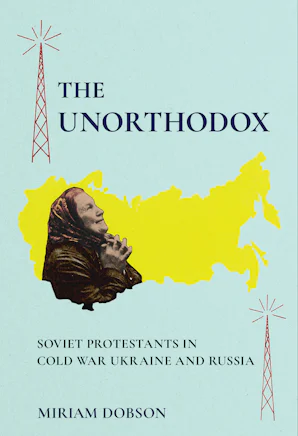
Unconventional presents a new history of Protestant communities in Ukraine and Russia, from the religious renaissance of World War II to four decades of the Cold War.
These communities received disproportionate attention in the Soviet Union, where they were the subject of bureaucratic reporting, sensational journalistic stories, and court transcripts.Miriam Dobson examines why these traditions aroused the interest of the communist regime, challenges prevailing ideas about the communist state and its suppression of religion, and argues that the Soviet regime exploited religious traditions to assert its modernity. This Soviet interest in the Protestant minority was later reflected in the Western media.When subjected to scrutiny, the reactions of those belonging to the evangelical Christian Baptist and Pentecostal groups varied. Some believed that belonging to the Soviet Union could be combined with Protestantism, while others concluded that it was impossible to practice Christian life in the Soviet Union. A minority developed alternative institutions, such as the Council of Relatives of Women Prisoners, which was very effective in producing and exporting Samizdat's texts.Through oral history interviews and unpublished letters, Unconventional explores the sense of purpose and belonging that collective life provided, as well as the potential for conflict and discord as members navigated what it meant to live according to the Bible in a modern, secular world. Dobson pays particular attention to gender dynamics within these women-dominated groups.