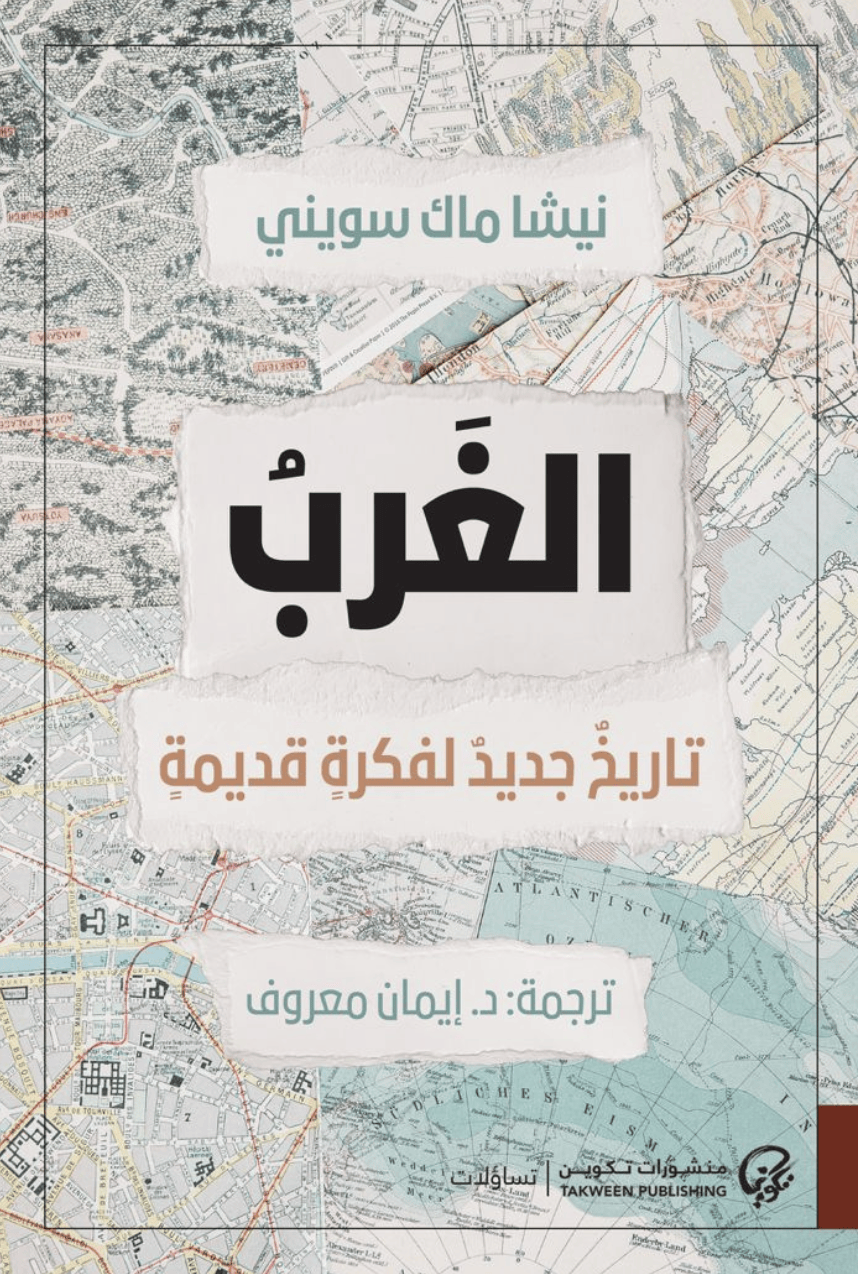
This is not a book about the history of the "civilization of the West", but about the great lie that has become taught as history, narrated as truth, and originally issued to civilization.
This book provides a new and radical reading of the idea of the "West" as a historical and cultural structure that has arisen and developed through centuries of interaction, conflict, and interpretation. Nisha McSweeney proceeds from the premise that the "West" was never a fixed entity or a unique cultural essence, but always a metamorphic perception.Shaping its boundaries according to the requirements of politics, authority and knowledge.
The author traces the paths taken by this idea throughout history, from the classical Greek and Roman eras, through the Middle Ages and the colonial era, to contemporary discourses, showing how some voices were glorified and others marginalized, and how selective narratives contributed to the centralization of the “West” in the consciousness of the historical world.This work is characterized by analytical rigor and historical depth, and is based on a variety of sources, including classical texts, imperial documents, and the works of thinkers and marginalized alike. Thus, it not only revisits European history, but also offers a broader reflection on the concepts of identity, civilization, and representation.
It is a book that provokes universals and incites a rethinking of the great narratives that have shaped the modern world.