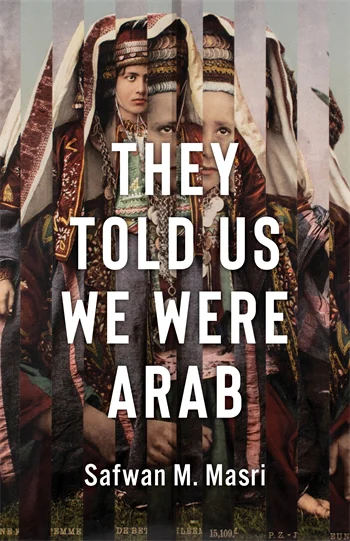
In the book “They told us that we are Arabs,” Safwan M. presents: Egyptian is a critical and personal study of what it means—and what it costs—to be labeled “Arab.” Drawing on history, political analysis, cultural criticism, and his own experience as a Palestinian-Jordanian-American, he traces how this broad identity arose: who defined it and to what ends.Al-Masry systematically deconstructs the pillars that are evidence of a unified Arab identity – language, culture, history, and politics – across a region spanning five million square miles and home to more than 450 million people.
It shows that the term “Arab” has never been used as a coherent ethnic, religious, linguistic, or political category. Rather, it was a flexible and often imposed classification, made intelligible through the legacy of colonialism, nationalist projects, authoritarian regimes, and Western frameworks of representation.Although often invoked as a source of unity, this category has diminished internal diversity and displaced more nuanced ways of understanding belonging, citizenship, and political responsibility.
The consequences of this dispossession are particularly evident in Palestine. A century-long project to erase Palestinian identity and make Palestinians interchangeable with “Arabs” has obscured political realities, reframed the concept of displacement, and portrayed a settler-colonial project as a territorial dispute.This book moves between analysis and contemplation, and reveals how Arab identity has come to seem natural, inevitable, and necessary, making identity freer, more precise, and closer to lived experience.