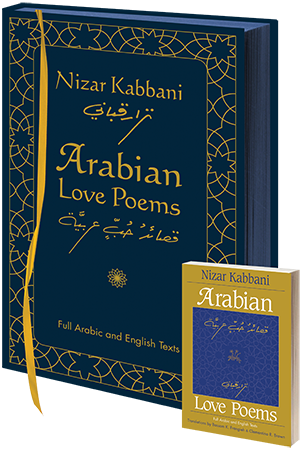
Nizar Kabbani’s poetry speaks of love, desire, beauty, freedom, and longing with a directness that is as fresh today as when it was first written. His poems have been described as “more powerful than all the Arab regimes put together” (Lebanese Daily Star). The London Times called him “the Arab world’s greatest love poet in modern times.” And Sulhi Al-Wadi extolled (in Tishreen): “Qabbani is like water, bread, and the sun in every Arab heart and house.”
“I am the Damascene,” Kabbani once wrote. “If you dissect my body, grapes and apples will come out of it. If you open my veins with your knife, you will hear in my blood the voices of those who have departed.” Though he settled in London for political reasons, upon his death in 1998 Kabbani was buried, as he requested, in Damascus.