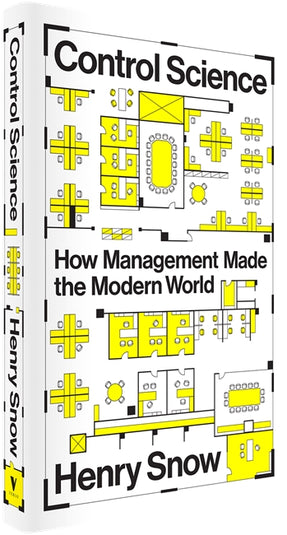
What are the rules that govern our work day? Who put it? How do these rules dominate the rest of our lives?
Whether on seventeenth-century Caribbean plantations or in Amazon warehouses today, powerful powers have been developing new ways to control workers, and new justifications for doing so. Concepts of control perfected in factories have expanded to dictate our personal lives, our political rights, national policies, and the global economy.Seventeenth-century thinkers, such as William Petty and John Locke, argued that humans are selfish machines that must be controlled for their own sake. A century later, Jeremy and Samuel Bentham attempted to do just that with the infamous Panopticon Prison.
When Japanese elites in the nineteenth century imported European factory technologies, they created new theories of political control to justify this development.After World War II, General Electric created an in-house propaganda department to fight unions, then promoted that propaganda nationwide with the help of a representative, future President Ronald Reagan. Following these practices, today's billionaires dream of extending the algorithmic control of Amazon warehouses to every aspect of our lives.Combining intellectual, economic, and labor history, Control Science is an exciting and lucid historical work. Henry Snow reveals how popular notions about work, economics, and human nature have been fabricated, and how they must now be called into question.