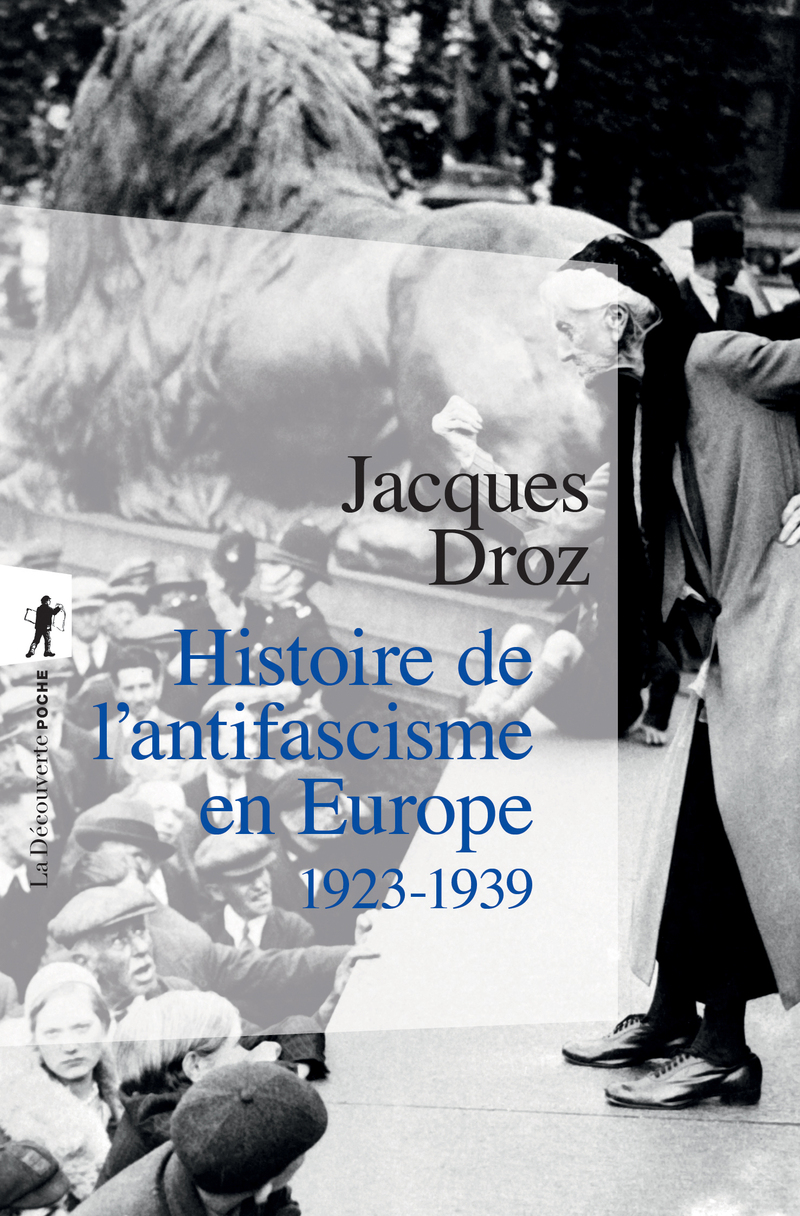
History of Antifascism in Europe 1923-1939, whose title translates into English as (History of Antifascism in Europe 1923-1939), by the late world-renowned French historian Jacques Droz, provides an in-depth and authoritative classic historical study that traces the roots and development of anti-fascist movements on the European continent during the interwar period. The book is published in a new and anticipated edition by the prestigious French publishing house “Éditions La Découverte” in...August 2026 Within the Humanities and Social Sciences Pocket Series, it gains utmost urgency and renewed importance at a time when democratic defeats continue across Europe, reviving the specter of fascism and forcing a review of this remarkable legacy of struggle.The central thesis of this influential work - which comes in this edition with a special appreciation and introduction from academic Stephanie Prezioso - revolves around dissecting the intellectual and organizational structure of the movements and individuals who rose to resist the fascist and Nazi tide. Druz brilliantly highlights the complex challenges and complexities faced in forging a solid united front. Where the researcher deconstructs the duality of “fragile unity” and the ideological disputes raging between the leftist, socialist, and liberal factions that tried to coordinate among themselves.To rein in the rising dictatorships in Italy and Germany, revealing how internal divisions helped pave the way for the incursion of far-right forces.
The book is based on a solid reference of knowledge that the author possesses as one of the leading specialists in German and European history, and the author of the famous encyclopedia “The General History of Socialism.” Throughout its 400 pages, the narrative combines precise political analysis with rigorous historical documentation, tracing geopolitical paths from the rise of Mussolini in 1923 until the outbreak of war.Second World War in 1939, which makes the work a guide to understanding the mechanisms of defending democracy and human rights through the bitter experiences of the past.
Rereading this historical reference is an intellectual wake-up call and an urgent necessity for students of political science and contemporary history. It does not merely provide a nostalgic account of heroism, but rather presents a critical and theoretical examination of the lessons learned that can be used to confront the current rise of populist and extremist discourses in modern Western societies.