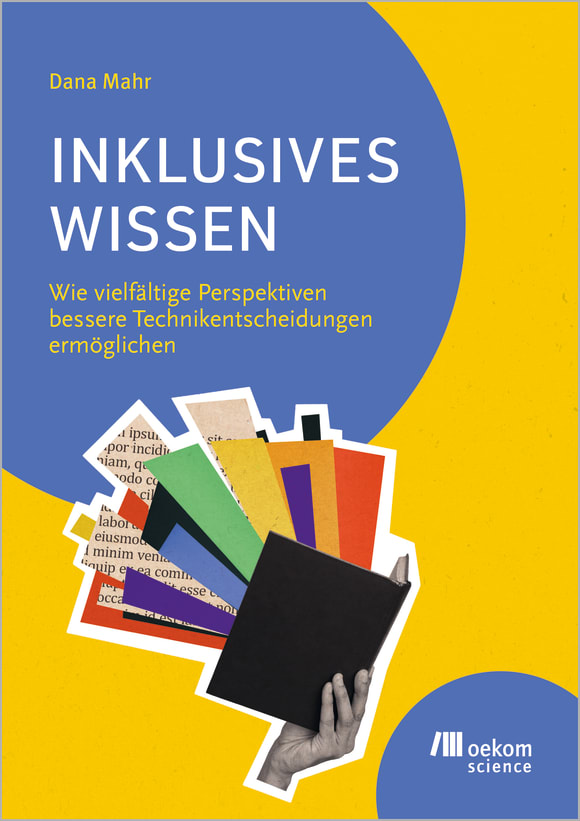
Technology shapes our daily lives, from digital platforms and medicine to environmental and social design issues of the future. But who actually determines what counts as relevant knowledge in technology debates? Scientific expertise, institutional procedures, and quantifiable data often dominate. On the other hand, the experiences of those affected, marginalized groups, and local communities often remain marginalized.This book shows why this issue is problematic, and what technology evaluation can achieve by taking different forms of knowledge seriously. Using examples from digital health activism, self-production of knowledge, non-Western epistemologies, and political struggles over evidence, it becomes clear that just technological decisions do not emerge from a single perspective, but from a reflective interaction with many perspectives.The book invites readers to rethink technology: in a more open, inclusive way and closer to the lived reality of the people affected by it.
Holistic knowledge: How diverse perspectives contribute to better technology decisions
المعرفة الشاملة: كيف تُسهم وجهات النظر المتنوعة في اتخاذ قرارات تكنولوجية أفضل
Not Translated
Listen to book
Bibliographic Data
| Author | |
|---|---|
| Publisher | oekomWebsite |
| Country | المانيا |
| Primary Category | Technologies and Sciences |
| Published | 2026 |
| Language | German (DE) |
| Pages | 288 pages |
| Edition | The first |
| Dimensions | 14×22 |
| ISBN | 978-3-98726-569-3 |
| Translation | Not Translated |
About Dana Mahr
Dana Maher is a researcher at the Institute for Technology Assessment and Analysis of Systems (ITAS) at Karlsruhe Institute of Technology (KIT). She investigates the social and ethical issues surrounding science, technology and health, as well as knowledge exchange between different stakeholders. Researcher at the Institute for Technology Assessment and Analysis of Systems (ITAS) at Karlsruhe Institute of Technology (KIT). It investigates the social and ethical issues surrounding science, technology and health, as well as knowledge exchange between various stakeholders.