
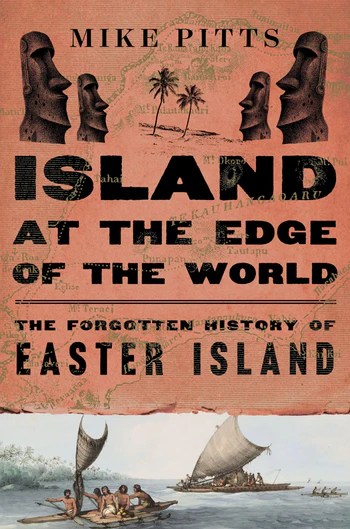
“A crisp, confident, and convincing new account of the place and its chroniclers" — The New Yorker “A definitive history of the mysteries of Easter Island...compelling...[a] magisterial history.” — New York Times “Revelatory…fascinating… wholly convincing” — Daily Mail (UK) A vital and timely work of historical adventure and reclamation by British archeological scholar Mike Pitts—a book that rewrites the popular yet flawed history of Rapa Nui (Easter Island) and uses newly unearthed findings and documents to challenge the long-standing historical assumptions about the manmade ecological disaster that caused the island’s collapse. Rapa Nui, known to Western cultures as Easter Island for centuries, has long been a source of mystery. While the massive stone statues that populate the island’s landscape have loomed in the popular Western imagination since Europeans first set foot there in 1722, in recent years, the island has gained infamy as a cautionary tale of eco-destruction. The island’s history as it’s been written tells of Polynesians who carelessly farmed, plundered their natural resources, and battled each other, dooming their delicate ecosystem and becoming a warning to us all about the frailty of our natural world. But what if that history is wrong? In The Island at the Edge of the World, archeological writer and scholar Mike Pitts offers a direct challenge to the orthodoxy of Rapa Nui, bringing to light new research and documents that tell a dramatic and surprising story about what really led to the island’s downfall. Relying on the latest archaeological findings, he paints a vastly different portrait of what life was like on the island before the first Europeans arrived, investigating why a Polynesian people who succeeded for centuries throughout the South Pacific supposedly failed to thrive in Rapa Nui. Pitts also unearths the vital story of one of the first anthropologists to study Rapa Nui, an Oxford-trained iconoclast named Katherine Routledge, who was instrumental in collecting firsthand accounts from the Polynesians living on Rapa Nui in the late nineteenth and early twentieth centuries. But though Routledge’s impressive scholarship captured the oral traditions of what life had been like pre-1722, her work was widely dismissed because of her gender, her reliance on indigenous perspectives, and her conclusions which contradicted her historical peers. A stunning work of revisionism, this book raises critical questions about who gets to write history and the stakes of ignoring that history’s true authors. Provocative and illuminating, The Island at the Edge of the World will change the way people think about Easter Island, its colonial legacy, and where the blame for its devastation truly lies.
Island at the Edge of the World The Forgotten History of Easter Island
جزيرة على حافة العالم: التاريخ المنسي لجزيرة الفصح
Not Translated
Listen to book
Bibliographic Data
| Author | |
|---|---|
| Publisher | Mariner BooksWebsite |
| Publisher Address | orders@harpercollins.com |
| Country | USA |
| Primary Category | Social Studies |
| Also In | |
| Published | 2026 |
| Language | English (EN) |
| Pages | 368 pages |
| Edition | first |
| Dimensions | 6x9 |
| ISBN | 9780063344679 |
| Translation | Not Translated |