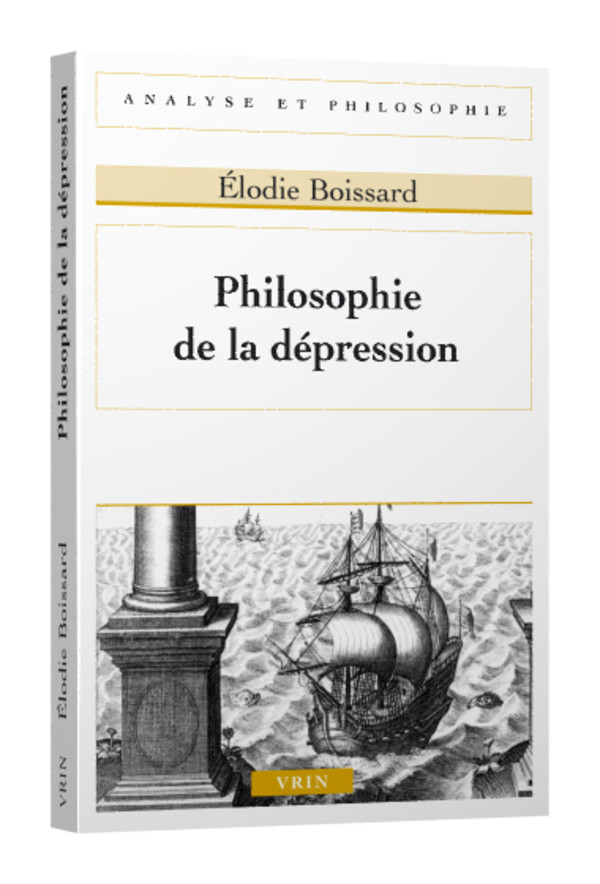
The book “The Philosophy of Depression” by French researcher Elodie Poissard deals with depression as a complex, dynamic structure in which five basic dimensions intersect: mood, beliefs, emotions, behavior, and the ability to act. The book refuses to reduce this psychological state to a mere biological cause or fleeting sadness, but rather presents it as a circular system that reproduces itself and fuels its continuation.
The book is divided into integrated levels that explain how depression turns into a closed cycle:Depressive mood: It is not just a passing emotion, but rather a state that changes the way the world is revealed to the patient, affecting his perception of time, the body, self-esteem, and relationships with others.
Active depressive beliefs: Insistent thoughts that gain strength as the condition continues, as the person sees himself as helpless and interprets any failure as evidence of a permanent deficiency in his abilities.Self-verifying beliefs (circular relationship): When the patient believes that he will fail, he automatically stops trying or withdraws, which leads to actual failure. This result confirms the validity of his first negative belief and closes the circle.
The real addition of the book lies in moving depression from the category of “medical description of symptoms” to the category of “dynamic interpretation,” considering that the biggest problem is not the absence of action, but rather the decline in the ability to summon the psychological forces that make action possible.However, the analysis opens the door to critical questions about the limited use of individual clinical experience, the decline in the presence of psychoanalytic theses (with the exception of passing references to Freud and Wiedlocher) in favor of cognitive-behavioral therapy, as well as the importance of comparing depression with a state of “mania” to understand how the self values its limits and potential.
The report concludes that the book succeeds in moving depression from a purely medical description to a philosophical explanation of the psychological dimensions of action and suffering.