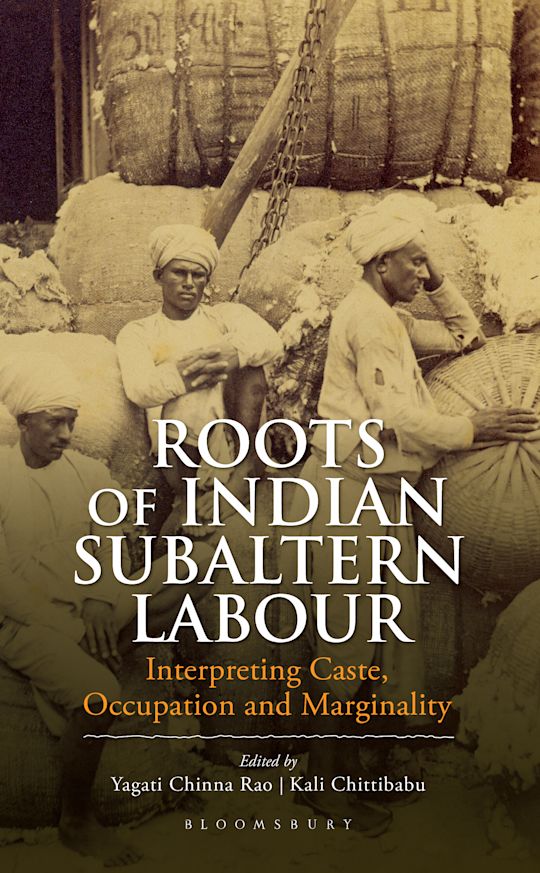
Roots of Indian Subaltern Labour offers a new examination of the relationship between labour, caste, and social hierarchy in India. By bringing together traditional historiographical debates and contemporary empirical perspectives, it deepens our understanding of how caste has shaped labour relations historically. Rather than merely extending existing scholarship, the book proposes new analytical approaches by engaging with the intersecting domains of culture, gender, religion, and social identity in shaping the material foundations of society and the historical position of untouchables and other marginalized communities.
The book seeks to demystify classical Indian texts-both religious and secular-in order to examine the ideological foundations of hierarchy and the historical processes that led to the crystallization of hereditary, endogamous caste groups. It traces the trajectory of labour history in the Indian context, highlighting the connections between caste-based occupational structures, social discrimination, and the exploitation of lower-caste labour.
It introduces the concept of labour as a “social bottom” category to interpret labour relations in the pre-modern and colonial periods. The book further examines how colonial policies, labour mobilizations, and lower-caste political movements shaped the changing dynamics of caste and labour in modern India.