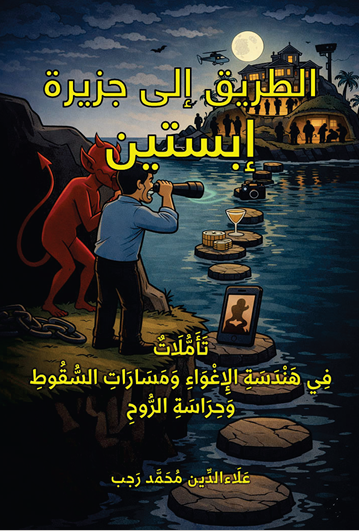
The book “The Road to Epstein’s Island” was recently published... Reflections on the Architecture of Seduction, Paths of Fall, and Guarding the Soul” by researcher Alaa El-Din Muhammad Rajab. It deals with one of the issues that most aroused the interest of world public opinion, from an intellectual, psychological, and moral perspective, going beyond the limits of treating it as a media issue or a scandal concerning influential people.The book starts from a question that goes beyond researching people and events to trying to understand the paths that may lead a person to deviation, asking: How does the path begin? How can a whim turn into a habit, habit into a system, lust into a means of blackmail, and power into immunity that isolates its owner from conscience and accountability?The author stresses that the book is not a book on scandals, but rather a study of the psychological, cultural and civilizational structures that allow such phenomena to be repeated in different times and places, indicating that “the island” is not just a geographical location, but rather it may begin within the soul when a person gets used to justifying and redefining a mistake until he loses his moral sensitivity towards it.The book also discusses the idea that major deviations do not arise suddenly, but rather are formed through a series of small, accumulated steps, starting with normalizing the gaze, repeated exposure to exciting content, and leaving the imagination unchecked, all the way to gradually crossing the limits.The proposal is not limited to criticizing the deviations of influential people, but rather invites the reader to review himself, stressing that the difference between people may be in the ability to implement it, not at the beginning of the path, and that true prevention begins with building self-control, controlling vision and imagination, and understanding the methods of seduction before reaching the stages of deviation.The author points out that he was keen to provide an intellectual, psychological and educational treatment that was far from sensationalism or reviewing the facts, while benefiting from the Islamic moral and spiritual capital in building a preventive vision that contributes to self-preservation and enhancing awareness.
The book concludes with a call for contemplation and review, instead of being preoccupied with issuing judgments on people, stressing that understanding the origins of deviation and its paths is the most important way to prevent it and close the roads leading to it.