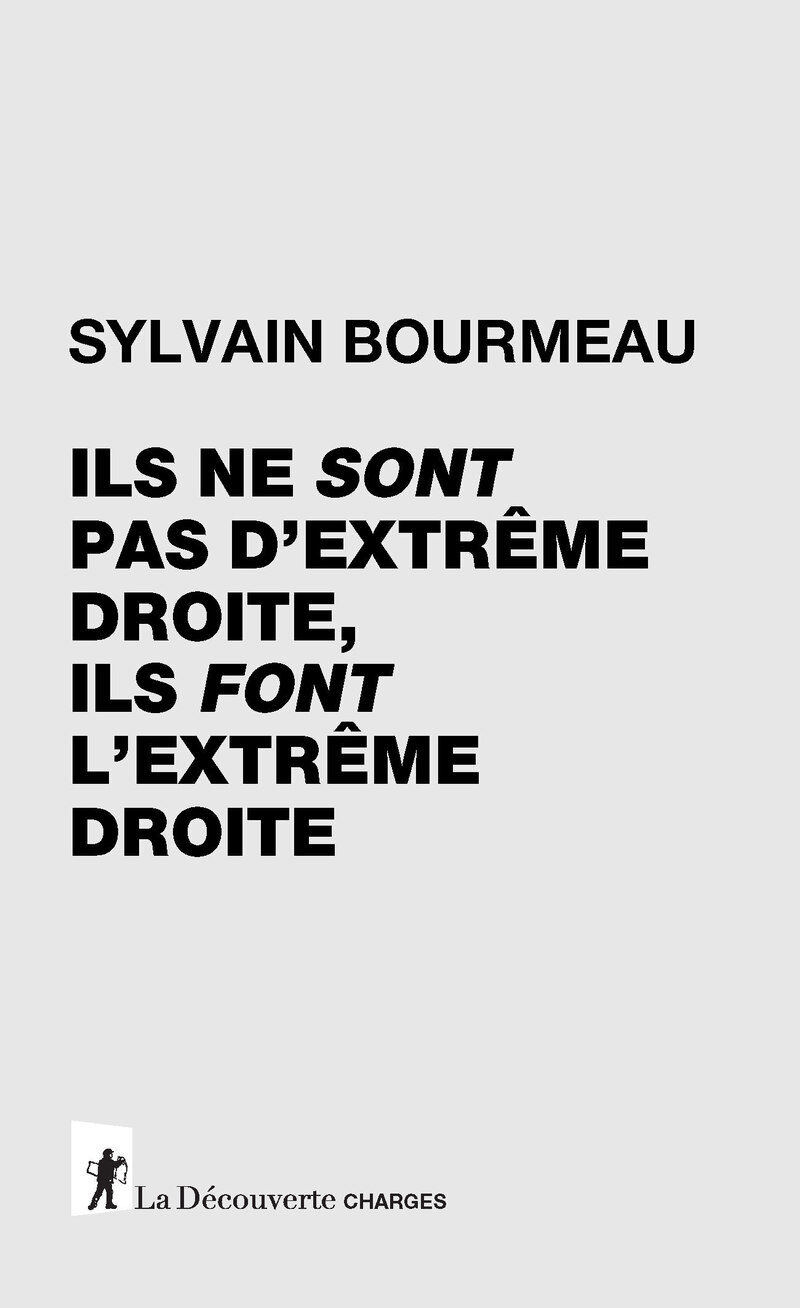
"They are not the far-right, they are the ones who make the far-right", by the prominent French journalist and researcher Sylvain Bourmeau, provides a critical intellectual and deconstructive indictment that reveals how editorial choices and ordinary daily journalistic practices contribute to the legitimization of the far right and pave the way for its contemporary rise. The book, which will be published in an upcoming edition by the prestigious French publishing house “La Decouverte” in August 2026 as part of the “Charges” series, goes beyond the logic of direct condemnation to raise a disturbing question.On the ethical and professional responsibility of public opinion makers in the modern era.
The central thesis of the work stems from monitoring the hidden mechanisms pursued by media figures and press institutions who do not publicly adopt the ideology of the extreme right, nor do they describe themselves as extremists, but through their news coverage, the formulation of their headlines, and the selection of their guests, they contribute, consciously or unconsciously, to spreading the ideas of this movement and normalizing them within society. Bormo, founder of the popular online newspaper AOC, brilliantly explains howThe pursuit of digital sensationalism and garnering views has become a free tool that serves populist discourses, by reproducing concepts of exclusion and making them acceptable and debatable material in the public space.
The book, which extends over 192 pages, is based on the author’s long field experience in analyzing the French and European media scene, providing a precise analysis of the behind-the-scenes newsrooms and the editorial decision-making process. Bormo not only monitors the phenomenon, but also places a revealing mirror in front of his fellow journalists and intellectuals to confront failurestructural in protecting the values of pluralism and democracy, which makes the book a strict critical statement that redefines the concept of media neutrality, which often turns into objective complicity to expand the scope of hatred.
Reading this book represents an exceptional and urgent intellectual contribution for anyone interested in the mechanisms of public opinion making and the sociology of media, as it deconstructs the objective conditions that allowed a discourse that was rejected yesterday to become today the driving political force in modern Western societies.