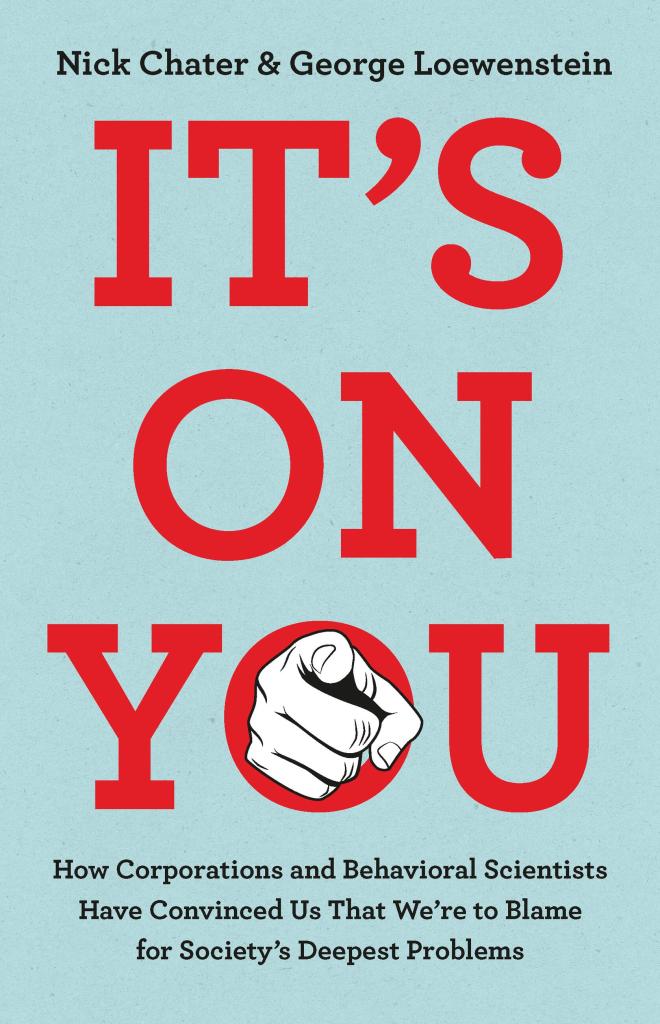
Two prominent behavioral scientists stress the need to reject “indirect mentoring” policies and stop blaming personal failures for society’s failures.
\\Daron Acemoglu, Nobel Prize winner and author of Power and Progress, says: “Excellent. A model lesson in how to integrate individual psychology with institutions, to encourage people to participate in finding solutions to our pressing problems through the democratic process.”\\Two decades ago, behavioral economics surged from academia to the corridors of power, on both sides of the Atlantic, promising that correcting individual biases could transform society. The hope was that governments could embrace a new approach to addressing society's deepest challenges, from inadequate retirement planning to climate change, by gently but intelligently guiding people to make choices that are in their best interests and the planet's best interests. The whole thing was very convenient, but phony.As behavioral scientists Nick Chater and George Loewenstein show in their book It's Up to You, indirect directives rarely work and tend to distract us from successful policies. For example, urging a shift to clean energy does not contribute to reducing carbon emissions, but rather distracts from the real challenge of building a low-carbon economy.It's Up to You shows how the wealthy and powerful have repeatedly used a clever trick: blaming individuals for social problems, with the unconscious complicity of behavioral economics, while lobbying against systemic changes that could actually help. Instead of trying to “fix” the victims of wrong policies, real progress requires rewriting social and economic rules for the common good.