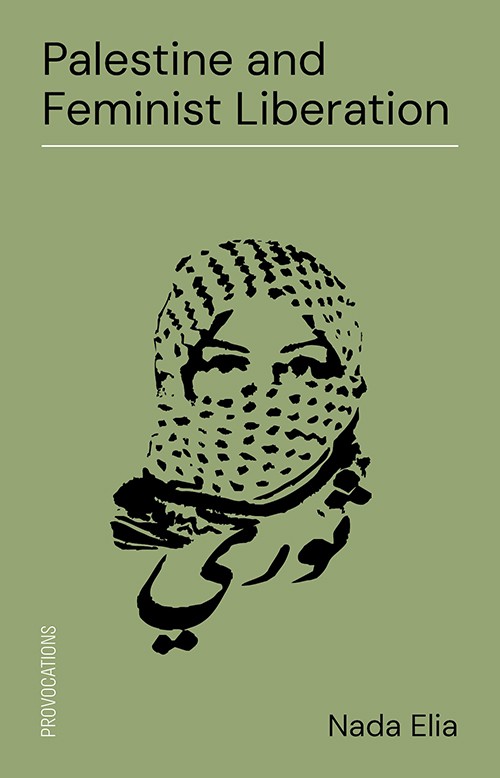
How do we explain that Israel, despite its genocidal attacks on Gaza and its violations of international law, remains immune to criticism? Why are many feminists in the Nordic countries, who are quick to condemn the influence of “Islamic fundamentalism” on Palestinian women, silent when it comes to denouncing the gender impact of Israeli apartheid in Palestine?In her book “Palestine and Feminist Liberation,” Palestinian scholar and activist Nada Elia argues that Palestinian women, far from being powerless and subservient, played an important role in resisting the dispossession of their people, first by the British Mandate, and then by Israel.Elia addresses the challenges Palestinian diaspora feminists face when organizing their activities in North America, where Zionist discourse has long prevailed, a discourse rooted in Orientalism and anti-Palestinian racism. Elia presents a vision of liberation based on indigenous feminism, with an emphasis on collective empowerment rather than individual progress.
Palestine and Feminist Liberation
فلسطين والتحرر النسوي
Not Translated
Listen to book
Bibliographic Data
| Author | |
|---|---|
| Publisher | Between the Lines BooksWebsite |
| Country | كندا |
| Primary Category | Ideas and Policies |
| Published | 2025 |
| Language | English (EN) |
| Pages | 80 pages |
| Edition | The first |
| Dimensions | 11×17 |
| ISBN | 978-1771136891 |
| Translation | Not Translated |
About Nada Elia
**Nada Elia** is a diaspora Palestinian writer, grassroots organizer, and university professor. She is the author of *Greater than the Sum of Our Parts: Feminism, Inter/Nationalism, and Palestine* and has contributed chapters to *Palestine: A Socialist Introduction* and *The Case for Sanctions on Israel*. She is currently completing *Falastiniyyat: A Century of Palestinian Feminisms*.