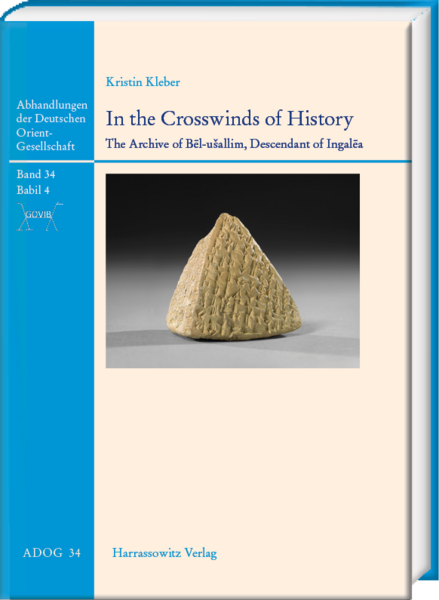
The fourth volume of the Babel series contains the complete edition of the archive of Bel Ochalem, descendant of Injalia, also known as N11 or "The Barber's Archive".
The Koldui Expedition to Babylon discovered these forty-nine texts in January 1909. The tablets were carefully packed in straw, and placed in two clay urns, which were apparently deliberately buried for later retrieval. It is an exceptional collection of texts, representing a complete deposit that was deliberately created.The 140-year period covered by this family and commercial archive coincides with one of the most turbulent phases of Babylonian history during the first millennium.
The oldest text from the era of Eriba Marduk dates back to the first half of the eighth century BC. Later generations of the family lived through the dynastic transitions from Chaldean to Neo-Assyrian rule, and witnessed the violent military conquest of the city during the reign of Sennacherib.Bel Ochalem himself grew up during the most difficult years following the destruction of Babylon and, towards the end of his life, buried the tablets after Nisan in the twentieth year of Candalano (March/April 828 BC), when violence again engulfed the city with the dawn of Nabopolassar's rise to power. Family history is closely linked to political history, and given the timing of their fall from power, they in turn bear witness to a shift in the course of political events.