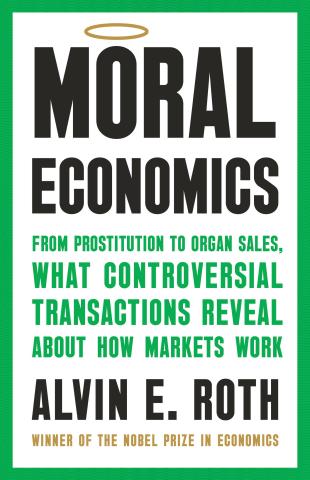
A Nobel Prize-winning economist shows us why we have to compromise when we cannot agree on what is right and wrong.
Some of the most complex disputes in our divided society are, at their core, over which actions and transactions should be prohibited. Should women and couples be able to purchase contraception, use artificial insemination, and terminate pregnancies through abortion? Should people be allowed to buy marijuana? What about fentanyl? Is it permissible to charge money for donating blood plasma or a kidney?Disagreements
Sharp because the arguments on both sides are often put in strict moral or religious terms. But in his book “Moral Economics,” Nobel Prize-winning economist Alvin E. Ruth, we can make progress on these and other difficult topics if we view them as markets—tools that help determine who gets what—and understand how these markets can be improved to be more effective. Markets do not have to allow everything or prohibit everything. Rational market design canIt strikes a balance between preserving the rights of individuals to pursue their interests and protecting the most vulnerable groups from harm. \*The book “Moral Economy” compiles
Combining Roth's unique experience as a pioneer in market design, with his brilliant analytical and humorous approach to complex issues, he offers a powerful and innovative new framework for resolving today's toughest controversies.