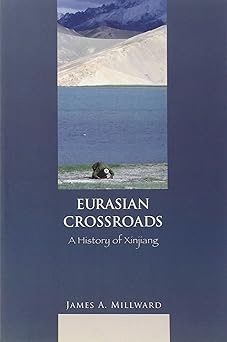
Crossroads of Eurasia is the first comprehensive history of Xinjiang, the vast region in central Eurasia bordering India, Pakistan, Afghanistan, Tajikistan, Kyrgyzstan, Kazakhstan, Russia, and Mongolia. Making up one-sixth of the area of the People's Republic of China, Xinjiang lies at the crossroads of China, India, the Mediterranean and Russia, and since the Bronze Age has played a pivotal role in the social, cultural and political development of Asia and the world. Xinjiang was once the center of the Silk Road, a corridor through which Buddhism, Christianity and Islam entered China. It was also the meeting point of the Chinese, Turkish, Tibetan and Mongol empires, where they communicated and competed with each other. Xinjiang's population consists of Kazakhs, Kyrgyz and Uyghurs, all Turkic Muslim peoples, as well as Han Chinese, and competing Chinese and Turkish nationalist visions continue to threaten the region's political and economic stability. Besides separatist fears, Xinjiang has received widespread international attention in recent decades thanks to its energy resources, strategic location and rapid development.
The Crossroads of Eurasia: A History of Xinjiang
مفترق طرق أوراسيا: تاريخ شينجيانغ
Translated
Listen to book
Bibliographic Data
| Author | |
|---|---|
| Publisher | Columbia University PressWebsite |
| Publisher Address | Columbia University Press |
| Country | USA |
| Also In | |
| Published | 2025 |
| Language | Arabic (AR) |
| Pages | 353 pages |
| Edition | Fourth edition |
| Dimensions | 14.53 x 2.34 x 21.67 cm |
| ISBN | 978-0231125970 |
| Translation | Translated |
Articles About This Book
Book Harvest
من صفحات التاريخ إلى تقارير الحاضر: الإسلام في الصين بعيون الباحثين
The Crossroads of Eurasia: A History of XinjiangApr 20, 20266 min